
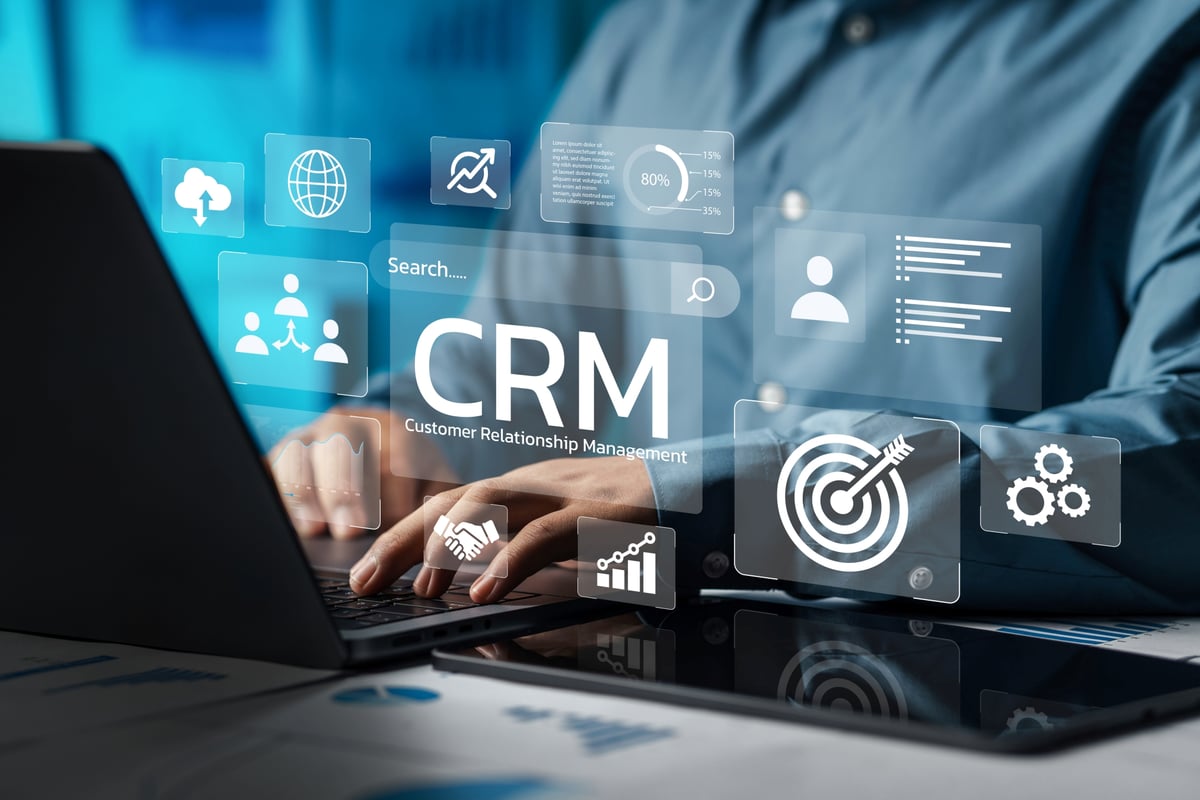
A CRM system is a software platform that centralizes customer data, tracks interactions across sales and marketing channels, and automates relationship management workflows to improve retention and revenue. When businesses ask "crm system what is it," they're seeking to understand how these platforms transform scattered customer information into actionable intelligence. Modern CRM systems serve as the operational backbone for organizations managing complex customer relationships, enabling teams to collaborate on deals, personalize communications, and measure engagement at scale.
TL;DR:
- CRM systems centralize customer contact information, communication history, purchase records, and engagement data into a single database
- Core modules include contact management, sales pipeline tracking, marketing automation, customer service ticketing, and analytics
- Businesses deploy CRM platforms to reduce manual data entry, prevent duplicate outreach, standardize processes, and forecast revenue
- Implementation requires data migration, user training, integration with existing tools, and ongoing customization to match workflows
- Modern CRM platforms integrate with ERP systems, marketing tools, support desks, and communication channels to create unified customer views
What Defines a CRM System in 2026
A Customer Relationship Management system is a database-driven application that records every customer touchpoint, assigns ownership to team members, and triggers automated actions based on predefined rules. The system stores structured data including names, contact details, company affiliations, interaction timestamps, and transaction history. Unlike spreadsheets or email folders, CRM platforms enforce data consistency, provide role-based access controls, and generate reports that reveal patterns across thousands of customer records.
The defining characteristic of CRM systems is their ability to connect discrete interactions into continuous relationship timelines. A single customer record might include initial website form submissions, sales call notes, email campaign responses, support tickets, invoice history, and renewal dates. This unified view prevents teams from duplicating outreach, contradicting previous commitments, or missing opportunities for upsells and cross-sells.
Core Database Architecture
CRM systems organize information into related tables: contacts, accounts, opportunities, activities, and products. Contacts represent individual people. Accounts represent organizations. Opportunities track potential deals through stages like qualification, proposal, negotiation, and closure. Activities log emails, calls, meetings, and tasks. Products define items or services sold, including pricing, descriptions, and inventory status.
These tables connect through relational keys. A contact belongs to an account. An opportunity links to both a contact and an account. Activities associate with specific opportunities. This structure allows users to query "show all open opportunities for accounts in the healthcare sector where the last activity occurred more than 30 days ago" without manual list building.
| CRM Component | Primary Function | Data Stored |
|---|---|---|
| Contact Management | Individual person records | Names, titles, emails, phones, preferences |
| Account Management | Organization records | Company names, industries, addresses, revenue |
| Opportunity Tracking | Deal pipeline visibility | Deal values, stages, close dates, probabilities |
| Activity Logging | Interaction history | Emails, calls, meetings, notes, timestamps |
| Product Catalog | Inventory and pricing | SKUs, descriptions, prices, availability |

How CRM Systems Manage Customer Relationships
CRM platforms manage relationships by capturing every interaction, assigning follow-up tasks, and alerting team members when action is required. When a prospect submits a contact form, the CRM creates a new lead record, assigns it to a sales representative based on territory rules, and sends an automated acknowledgment email. The representative receives a notification to call within two hours. After the call, they log notes, schedule a demo, and move the lead to "qualified" status.
This orchestration continues throughout the customer lifecycle. Marketing teams create email campaigns targeting specific segments. Service teams log support tickets linked to customer accounts. Account managers schedule quarterly business reviews. Each action generates data that informs future decisions and personalizes subsequent interactions.
Automation Workflows
Automation reduces manual work and ensures consistency. CRM systems trigger actions based on conditions: send an email when a deal reaches "proposal sent" stage, create a task when a support ticket remains unresolved for 48 hours, notify a manager when a deal exceeds $100,000 in value. These workflows prevent human error and maintain service level agreements.
Advanced CRM platforms support multi-step sequences. A lead nurture sequence might send three educational emails over two weeks, pause if the prospect opens a pricing page, then alert sales to call. This combination of automation and human judgment accelerates conversion while maintaining personal touch.
What Business Problems CRM Systems Solve
Organizations implement CRM systems to address specific operational failures. The most common problem is data fragmentation: customer information exists in email inboxes, spreadsheets, calendars, and individual notes, making it impossible to answer "what's the status of this account?" without interviewing multiple team members. CRM platforms consolidate this information into a single source of truth accessible to authorized users.
A second problem is inconsistent process execution. Without standardized workflows, sales representatives follow different qualification steps, service teams apply varying resolution procedures, and marketing campaigns lack coordination. CRM systems enforce process through required fields, stage gates, and approval chains. This standardization improves forecasting accuracy and reduces quality variation.
Manual vs. Automated Customer Management
| Aspect | Manual Management | CRM-Automated Management |
|---|---|---|
| Data entry | Spreadsheets, multiple updates | Single entry, automatic propagation |
| Follow-up tracking | Calendar reminders, sticky notes | Automated task generation, escalation alerts |
| Reporting | Manual aggregation, outdated data | Real-time dashboards, scheduled reports |
| Team collaboration | Email forwards, verbal handoffs | Shared records, activity feeds, notifications |
| Customer history | Fragmented across tools | Unified timeline, complete interaction record |
The third problem is missed revenue opportunities. Without visibility into customer behavior, businesses fail to identify upsell triggers, renewal risks, or cross-sell potential. CRM analytics surface patterns: accounts that haven't purchased in six months, contacts who engaged with product documentation but never received sales outreach, or customers whose contract value suggests they've outgrown their current tier.
Understanding "crm system what is it" helps organizations recognize these systems as operational infrastructure rather than passive databases. They actively guide users through processes, surface actionable insights, and prevent common relationship management failures that cost revenue and damage retention.
What Types of CRM Systems Exist
CRM systems fall into three functional categories: operational, analytical, and collaborative. Operational CRM focuses on automating sales, marketing, and service processes. These platforms provide tools for campaign management, lead scoring, quote generation, and ticket routing. Analytical CRM emphasizes data mining, customer segmentation, and predictive modeling to inform strategy. Collaborative CRM facilitates information sharing across departments, ensuring consistent customer experiences regardless of which team member handles an interaction.
Within operational CRM, further specialization exists. Sales-focused CRM prioritizes pipeline management, forecasting, and territory assignment. Marketing-focused platforms emphasize campaign automation, lead nurturing, and attribution tracking. Service-focused systems prioritize case management, knowledge bases, and customer self-service portals. Many enterprise platforms combine all three, but smaller businesses often choose specialized tools that integrate with other applications.
Deployment Models
CRM systems deploy as cloud-based software-as-a-service (SaaS), on-premises installations, or hybrid configurations. Cloud CRM runs on vendor servers, accessible through web browsers and mobile apps. Updates occur automatically, and costs follow subscription pricing. On-premises CRM runs on company servers, requiring IT staff for maintenance but providing complete control over data and customization. Hybrid models store sensitive data locally while using cloud features for collaboration and mobile access.
- Cloud CRM advantages: Lower upfront costs, automatic updates, remote access, vendor-managed infrastructure
- On-premises CRM advantages: Complete data control, customization flexibility, compliance with data residency requirements, no ongoing subscription fees
- Hybrid CRM advantages: Balance between control and convenience, gradual migration paths, selective cloud feature adoption
How to Implement a CRM System Successfully
Successful CRM implementation follows a structured methodology: define requirements, select software, migrate data, configure workflows, train users, and measure adoption. Requirements definition begins with documenting current processes, identifying pain points, and specifying desired outcomes. A manufacturing company might require serialized inventory tracking integrated with customer orders. A service business might need scheduling tools linked to customer accounts.
Software selection involves evaluating platforms against requirements, considering integration capabilities, and testing usability with actual users. Businesses often create a shortlist of three to five vendors, request demonstrations, and conduct proof-of-concept trials with real data. Comparing CRM platforms requires assessing licensing costs, customization limits, API availability, and vendor stability.
Data Migration Steps
- Export existing customer data from spreadsheets, email contacts, accounting systems, and legacy databases into CSV files
- Clean and standardize records by removing duplicates, validating email addresses, standardizing formatting, and filling missing fields
- Map fields to CRM structure by matching source columns to CRM contact, account, and opportunity fields
- Import in stages by starting with accounts, then contacts, then opportunities to maintain relational integrity
- Validate imported data by spot-checking records, running reports, and confirming relationship links function correctly
Configuration transforms generic CRM software into business-specific tools. This involves creating custom fields (industry vertical, equipment serial numbers, certification dates), defining sales stages that match actual deal progression, building automation rules for territory assignment, and designing dashboards showing relevant metrics. Configuration requires understanding both the business process and the CRM platform's capabilities.
User training determines adoption success. Training should cover not just how to use features, but why the CRM improves their daily work. Sales representatives need to understand how pipeline visibility helps them prioritize. Service technicians need to see how customer history reduces diagnostic time. Training sessions should use real scenarios, provide hands-on practice, and establish data entry standards that ensure consistency.
When organizations invest in proper implementation, CRM systems become indispensable tools that teams rely on for daily operations. Brytend CRM delivers this value by combining flexible customization with structured workflows, enabling businesses to capture customer data exactly as their processes require while maintaining the discipline needed for accurate reporting and automation.

What Features Define Modern CRM Systems
Modern CRM platforms provide contact management as a foundation, storing unlimited records with custom fields, tags, and relationship hierarchies. Sales pipeline management visualizes deals across stages, calculates weighted forecasts, and alerts representatives when opportunities stall. Marketing automation creates email sequences, tracks campaign performance, scores leads based on engagement, and synchronizes data with advertising platforms.
Customer service modules manage support tickets from submission through resolution, route cases based on priority and expertise, maintain knowledge bases for self-service, and measure response times against service level agreements. Analytics dashboards display real-time metrics including revenue by source, conversion rates by stage, customer lifetime value by segment, and team performance against quotas.
Integration Capabilities
CRM systems connect with accounting software to sync invoices and payment status, email platforms to log correspondence automatically, calendar applications to schedule meetings without double-booking, telephony systems to enable click-to-dial and call recording, and marketing tools to track campaign attribution. These integrations eliminate duplicate data entry and ensure information consistency across applications.
API access enables custom integrations with proprietary systems. A business using specialized inventory management software might build an integration that creates CRM opportunities when stock reaches reorder points for specific accounts. Custom software development capabilities allow organizations to extend CRM functionality beyond standard features, incorporating unique business logic that provides competitive advantages.
For businesses managing complex equipment or service contracts, integration with field service management software ensures service history, maintenance schedules, and equipment specifications remain synchronized with customer records. This creates operational continuity where sales, service, and support teams access identical information.
What ROI Organizations Achieve with CRM Systems
Organizations measure CRM return on investment through revenue growth, cost reduction, and efficiency gains. Sales cycle reduction occurs when representatives access complete customer context instantly, eliminating research time and enabling personalized conversations. A study measuring CRM impact found sales cycles shortened by 8-14% on average when teams used centralized customer data compared to fragmented information sources.
Customer retention improves when service teams resolve issues faster using historical interaction data and when account managers receive proactive alerts about renewal risks. Retention rate increases of 5-10 percentage points translate directly to revenue growth, as acquiring new customers costs five to seven times more than retaining existing ones. CRM systems that track customer health scores and automate check-in sequences prevent silent churn.
Cost Reduction Metrics
- Reduced duplicate marketing spend: Unified contact databases prevent sending multiple campaigns to the same person
- Lower customer acquisition cost: Lead scoring focuses efforts on high-probability prospects rather than equal outreach to all contacts
- Decreased service resolution time: Access to complete customer history reduces diagnostic questions and repeat explanations
- Minimized lost opportunities: Automated follow-up tasks prevent deals from falling through cracks due to forgotten commitments
- Eliminated data entry redundancy: Single-entry information propagates across sales, marketing, and service modules automatically
Forecasting accuracy improves when CRM systems track historical close rates by stage, source, and representative. Instead of intuition-based projections, businesses calculate weighted pipelines: opportunities at 25% probability stage contribute 25% of their value to forecasts, 75% stage contributes 75%, and so forth. This statistical approach reduces planning errors and supports more confident resource allocation.
What Common CRM Implementation Mistakes to Avoid
The most damaging implementation mistake is deploying CRM without process redesign. Organizations that digitize inefficient manual processes simply automate dysfunction. Before selecting CRM software, businesses should map current workflows, identify bottlenecks, and design improved processes that the CRM will enforce. A sales process with redundant approval steps shouldn't be replicated in CRM; it should be streamlined first.
Insufficient user training creates adoption resistance. When teams don't understand how CRM improves their work, they perceive it as additional bureaucracy rather than a productivity tool. Training should emphasize benefits: less time searching for information, fewer missed follow-ups, clearer visibility into account status. Ongoing coaching during the first 90 days addresses questions as they arise in daily use.
Data Quality Failures
Poor data governance undermines CRM value. Without standards for required fields, formatting conventions, and duplicate prevention, databases quickly fill with incomplete, inconsistent records. Establishing data entry rules before launch prevents quality erosion: contact records require email addresses and company affiliations, opportunity records require close dates and stage assignments, activity logs require outcome descriptions.
Regular data hygiene maintains quality over time. Monthly audits identify records missing critical information, automated processes flag potential duplicates for merging, and validation rules prevent invalid data entry. Assigning data stewardship responsibility ensures someone monitors quality metrics and addresses degradation promptly.
Over-customization creates maintenance burdens and upgrade complications. While CRM platforms offer extensive customization, excessive modifications make systems difficult to use, slow to operate, and expensive to maintain. Businesses should adopt standard features when they cover 80% of requirements, customizing only for truly unique needs that provide competitive advantages.
What Integration Patterns Connect CRM with Other Systems
CRM systems integrate with enterprise resource planning (ERP) platforms to synchronize customer, order, and financial data. When sales representatives close deals, CRM creates records that trigger ERP order processing, inventory allocation, and invoicing. When ERP systems record payments, this information updates CRM account balances and flags accounts for renewal conversations. Microsoft emphasizes this integration in their Dynamics 365 platform, connecting CRM and ERP within a unified environment.
Marketing automation platforms connect to CRM through bidirectional data flows. CRM sends contact lists and segmentation criteria to marketing tools, which execute email campaigns, track engagement, and return behavioral data. This closed loop enables lead scoring: contacts who open emails, click links, visit pricing pages, or attend webinars receive higher scores, triggering sales outreach at optimal moments.
Customer service platforms integrate to maintain unified interaction histories. When customers submit support tickets, these appear in CRM contact timelines alongside sales activities and marketing engagement. Service resolutions sync back, informing sales representatives about product issues, feature requests, or expansion opportunities revealed during support conversations.
Real-Time Data Synchronization
Modern integrations use webhooks and APIs to maintain real-time data consistency. When a contact updates their email address in CRM, that change immediately propagates to email marketing platforms, preventing bounced messages. When warehouse management systems update inventory levels, CRM opportunity records reflect current availability, preventing representatives from selling unavailable products.
For businesses operating automated warehouses or managing complex supply chains, integration with warehouse automation solutions ensures inventory visibility within CRM, enabling sales teams to quote accurate delivery dates and proactively notify customers of fulfillment delays. This connection between customer-facing and operational systems creates seamless experiences that differentiate businesses in competitive markets.
What CRM Selection Criteria Matter Most
Business size determines appropriate CRM complexity. Small businesses with straightforward sales processes need contact management, basic pipeline tracking, and email integration. Mid-market organizations require multi-stage workflows, role-based permissions, and reporting hierarchies. Enterprise buyers need multi-currency support, territory management, complex approval chains, and API access for custom integrations.
Industry-specific requirements influence selection. Healthcare organizations need HIPAA-compliant systems with audit trails. Financial services require SOC 2 certification and granular access controls. Manufacturing businesses need serial number tracking and warranty management. Evaluating whether CRM platforms offer industry-specific modules or require custom development affects total cost of ownership.
Technical Evaluation Criteria
| Criterion | Why It Matters | Questions to Ask |
|---|---|---|
| Customization depth | Adapts to unique processes | Can we add custom fields, objects, and relationships? |
| API capabilities | Enables integrations | Does the API support real-time data sync and webhooks? |
| Mobile functionality | Supports field teams | Can users log activities, update records, and access data offline? |
| Reporting flexibility | Provides actionable insights | Can users create custom reports without IT assistance? |
| Data export options | Prevents vendor lock-in | Can we export complete data in standard formats? |
Scalability ensures CRM systems grow with businesses. A platform suitable for 20 users might perform poorly with 200. Evaluating architecture, database limits, and licensing models prevents costly migrations. Cloud CRM typically scales automatically, but performance degrades if database design doesn't account for growth. On-premises systems require capacity planning for server resources.
What Emerging CRM Capabilities Are Reshaping Customer Management
Artificial intelligence adds predictive and prescriptive capabilities to CRM systems. Lead scoring models analyze historical conversion data to identify which current prospects most resemble previous customers who converted. Opportunity risk assessment flags deals likely to slip based on inactivity patterns, missing information, or competitive signals. Next-best-action recommendations suggest which contacts to prioritize, what message to send, or which product to recommend.
Conversational interfaces enable natural language interaction with CRM data. Instead of constructing filtered reports, users ask "which opportunities in the Northeast region haven't had activity this month?" and receive instant answers. Voice assistants log meeting notes, create follow-up tasks, and retrieve customer information while representatives focus on conversations rather than typing.
Privacy and Consent Management
Regulatory requirements like GDPR and CCPA mandate explicit consent tracking and data deletion capabilities. Modern CRM systems record consent timestamps, preference changes, and opt-out requests. They provide customer-facing portals where individuals view stored data and submit deletion requests. Automated processes ensure compliance by suppressing contacts who've withdrawn consent and purging data within required timeframes.
For financial advisors managing client relationships, platforms like WebPrez complement CRM systems by providing structured frameworks for client education and engagement, ensuring compliant communication while maintaining the relationship data within CRM. This separation between compliance-sensitive content delivery and customer data management reduces risk while improving effectiveness.

What CRM Ownership Models Fit Different Organizations
Cloud-based CRM follows subscription pricing, typically charging per user per month. Costs range from $10-$300 per user monthly depending on feature tiers. This model provides predictable expenses, automatic updates, and minimal IT requirements. However, long-term costs may exceed on-premises alternatives, and businesses depend on vendor stability and service availability.
On-premises CRM requires upfront licensing fees, server hardware, and IT staff for installation and maintenance. After initial investment, ongoing costs include support contracts, upgrade projects, and infrastructure. This model suits organizations with existing data center capacity, strict data residency requirements, or long-term cost optimization goals. Total cost of ownership analysis should compare five to ten year expenses across models.
Open-source CRM platforms eliminate licensing fees but require technical expertise for deployment, customization, and maintenance. Organizations with development resources can modify source code to match exact requirements. Research on open-source CRM adoption by small and medium enterprises reveals implementation challenges but significant long-term flexibility benefits for businesses with technical capabilities.
What Questions to Ask When Evaluating CRM Systems
Before demonstrations, define must-have requirements, nice-to-have features, and deal-breakers. Must-haves might include mobile access, email integration, and custom fields. Nice-to-haves might include built-in telephony or social media monitoring. Deal-breakers might include inability to export data or lack of API access. This framework prevents feature overload from obscuring critical capability gaps.
During vendor demonstrations, request walkthroughs using your actual data and workflows rather than generic scenarios. Ask vendors to demonstrate importing your contact spreadsheet, creating an opportunity that matches your sales stages, and generating a report you currently produce manually. This reveals how much configuration effort implementation will require and whether the platform naturally accommodates your processes.
Critical Implementation Questions
- What data migration support does the vendor provide? Look for dedicated migration specialists, data validation tools, and guaranteed completion timelines
- How does licensing scale as users are added? Understand tier thresholds, volume discounts, and whether temporary users require full licenses
- What training resources are included? Evaluate online documentation quality, availability of instructor-led sessions, and certification programs
- What integration pre-builds exist for your current tools? Native integrations require less maintenance than custom-built connections
- What is the vendor's product roadmap? Understand planned features, update frequency, and how customer feedback influences development priorities
Post-implementation success requires ongoing optimization. Review usage analytics monthly to identify unused features, underutilized automation, and workflow bottlenecks. Gather user feedback quarterly to understand pain points and enhancement requests. CRM systems deliver maximum value when they evolve with changing business requirements rather than remaining static after initial deployment.
Understanding "crm system what is it" extends beyond technical definitions to encompass strategic value, implementation methodology, and operational impact. These platforms transform customer relationship management from reactive coordination into proactive orchestration, enabling businesses to scale personalized engagement without proportional headcount growth.
CRM systems centralize customer data, automate relationship workflows, and provide analytics that inform strategic decisions across sales, marketing, and service operations. Organizations that implement these platforms with clear requirements, clean data, and comprehensive training achieve measurable improvements in conversion rates, retention, and revenue per customer. When your business needs a CRM solution tailored to unique workflows, serialized inventory requirements, or complex integration demands, Brytend delivers custom software development expertise that transforms operational challenges into competitive advantages through purpose-built solutions that grow with your organization.