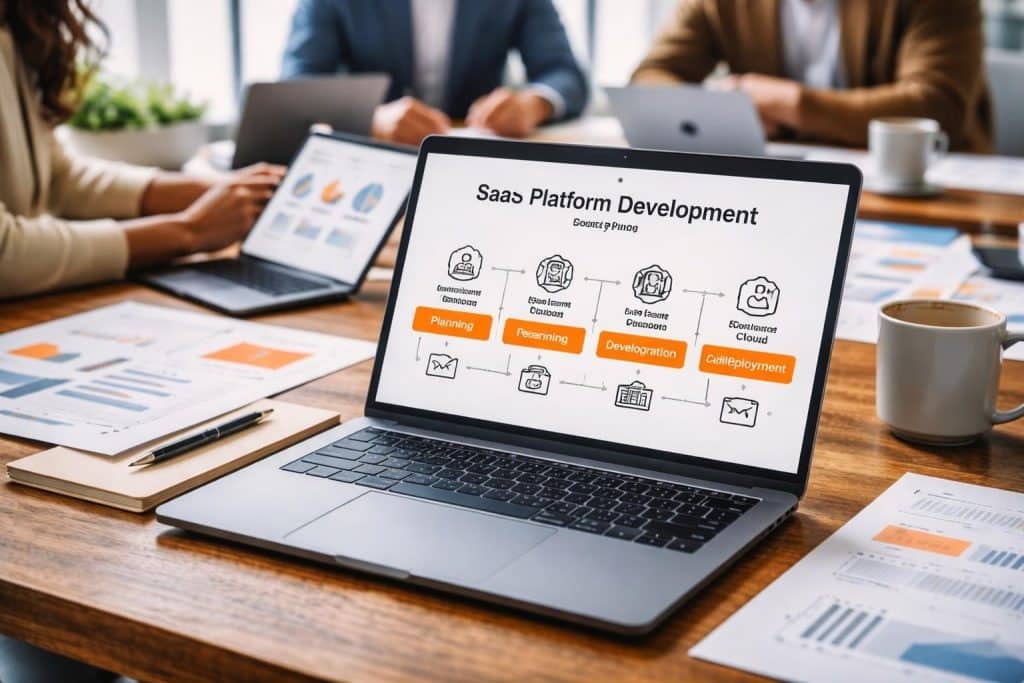
An it software development company builds custom software applications, systems, and platforms for business clients using defined methodologies, specialized technical teams, and project management frameworks. These companies deliver solutions across web, mobile, cloud, and enterprise environments, providing development, deployment, and maintenance services tailored to specific organizational requirements. Understanding how to evaluate and partner with an it software development company determines project success, cost efficiency, and long-term software performance.
TL;DR:
- An it software development company designs, builds, and maintains custom software solutions using specialized technical teams and proven development methodologies
- Core services include requirements analysis, architecture design, coding, testing, deployment, and ongoing support across multiple technology stacks
- Selection criteria include technical expertise, industry experience, development process maturity, communication protocols, and transparent pricing structures
- Project delivery models range from fixed-price contracts to time-and-materials arrangements, each suited to different requirements and risk profiles
- Quality assurance, security practices, and post-launch support capabilities distinguish professional development partners from basic coding services
What Is an IT Software Development Company?
An it software development company is a business entity that provides custom software engineering services to organizations requiring tailored applications, systems integration, or digital transformation solutions. These companies employ developers, architects, designers, quality assurance specialists, and project managers who collaborate to deliver software products aligned with client specifications.
The scope of work typically includes initial consultation, technical feasibility assessment, solution architecture, user interface design, backend development, database configuration, API integration, testing protocols, deployment procedures, and maintenance contracts. Unlike software product vendors who sell pre-built solutions, an it software development company creates unique applications addressing specific business processes, workflows, and competitive requirements.
Core Service Categories
Professional software development firms organize their offerings into distinct service lines that address different client needs and project types.
Custom Application Development
- Web applications using frameworks like React, Angular, or Vue.js
- Mobile applications for iOS and Android platforms
- Desktop software for Windows, macOS, or Linux environments
- Progressive web apps combining web and mobile functionality
Enterprise System Integration
- ERP system customization and module development
- CRM platform extensions and workflow automation
- Third-party API connections and data synchronization
- Legacy system modernization and migration projects
Cloud Solutions and Infrastructure
- Cloud-native application architecture on AWS, Azure, or Google Cloud
- Microservices design and containerization using Docker and Kubernetes
- Serverless computing implementations
- Cloud migration strategies and execution

How Does an IT Software Development Company Structure Projects?
An it software development company structures projects using formal methodologies that define phases, deliverables, roles, and quality gates. The chosen methodology determines timeline predictability, flexibility for changes, client involvement frequency, and risk distribution.
Agile Development Process
- Initial discovery phase establishes requirements, technical constraints, and success metrics
- Sprint planning breaks work into two-week iterations with defined deliverables
- Daily standups maintain team alignment and identify blockers
- Sprint reviews demonstrate working software to stakeholders
- Retrospectives improve processes for subsequent iterations
- Continuous integration ensures code quality through automated testing
Waterfall Methodology
- Requirements documentation captures complete specifications upfront
- System design phase produces detailed technical architecture
- Implementation follows approved specifications without mid-project changes
- Testing phase validates against original requirements
- Deployment executes planned release procedures
- Maintenance period addresses defects and minor adjustments
The Agile approach suits projects with evolving requirements or market uncertainty, while Waterfall serves well-defined specifications with regulatory compliance needs. Many companies adopt hybrid models combining structured planning with iterative execution.
Team Composition and Roles
| Role | Responsibility | Typical Ratio |
|---|---|---|
| Project Manager | Timeline, budget, stakeholder communication | 1 per project |
| Solution Architect | Technical design, technology selection, system integration | 1 per 5-8 developers |
| Backend Developer | Server logic, database design, API development | 40% of team |
| Frontend Developer | User interface, client-side logic, responsive design | 30% of team |
| QA Engineer | Test planning, automation, defect tracking | 20% of team |
| DevOps Engineer | CI/CD pipelines, infrastructure, deployment | 10% of team |
What Should You Evaluate When Selecting an IT Software Development Company?
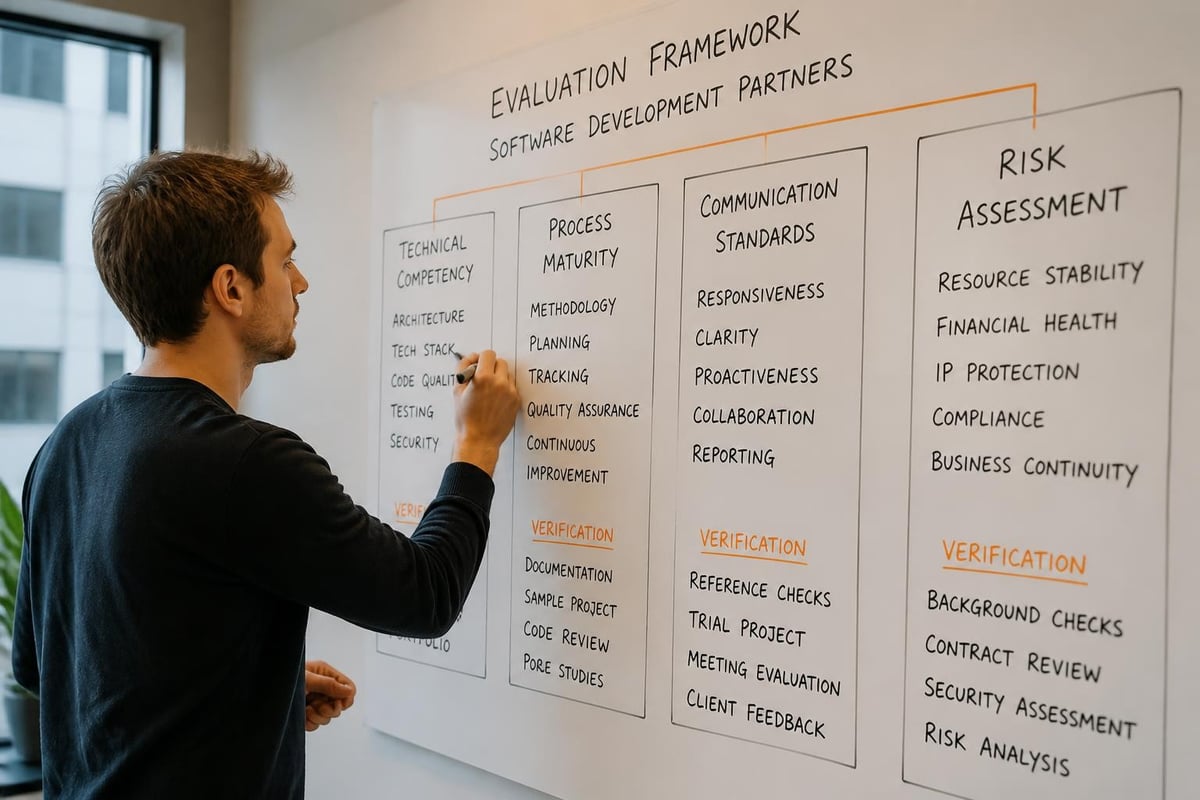
Selecting an it software development company requires systematic evaluation of technical capabilities, process maturity, communication practices, and financial stability. Buyers should assess multiple dimensions beyond hourly rates or portfolio presentation.
Technical Competency Assessment
- Specific technology stack expertise matching project requirements
- Code quality standards and review procedures
- Security practices including OWASP compliance and penetration testing
- Performance optimization experience with scalability requirements
- Documentation standards for code, architecture, and operations
Process and Methodology Verification
- Development methodology alignment with project constraints
- Quality assurance protocols and defect management procedures
- Change request handling and scope management practices
- Risk identification and mitigation frameworks
- Project tracking tools and reporting frequency
Communication and Collaboration Indicators
- Response time commitments for different communication channels
- Meeting cadence and stakeholder involvement expectations
- Language proficiency and time zone overlap for distributed teams
- Escalation procedures for issues requiring urgent resolution
- Knowledge transfer practices for internal team enablement
Sluggish software delivery creates executive-level risk when companies lack proper delivery infrastructure and modernization strategies, highlighting why vendor selection requires thorough process evaluation.
Due Diligence Checklist
- Request code samples or GitHub repositories demonstrating quality standards
- Verify client references with similar project complexity and industry
- Review security certifications (ISO 27001, SOC 2) and compliance capabilities
- Examine employee retention rates and team stability metrics
- Assess financial stability through credit reports or financial statements
- Evaluate intellectual property ownership terms in standard contracts
Why Do Businesses Partner with an IT Software Development Company?
Businesses partner with an it software development company to access specialized expertise, accelerate delivery timelines, manage resource constraints, or execute digital transformation initiatives beyond internal capabilities. The decision typically stems from strategic, financial, or operational factors requiring external technical resources.
Strategic Drivers
- Market entry requiring rapid product development
- Competitive differentiation through custom technology
- Digital transformation initiatives modernizing business models
- Innovation projects exploring emerging technologies
- Mergers requiring system integration and data consolidation
Resource and Capability Gaps
- Specialized skills unavailable in local talent markets
- Temporary capacity needs for fixed-duration projects
- Technology expertise outside core competencies
- 24/7 development cycles across global time zones
- Quality assurance and testing specialization
Financial and Risk Considerations
- Capital expense conversion to operational expense
- Variable cost structures matching project phases
- Risk transfer for technical delivery and performance
- Faster time-to-market reducing opportunity costs
- Avoidance of permanent headcount for uncertain demand
IT spending projections reaching $1.4 trillion in 2026 focus heavily on AI, cloud computing, and cybersecurity, areas where specialized development partners provide critical expertise.
Companies often engage development partners for CRM customization, such as tailoring workflow automation, adding industry-specific modules, or integrating external data sources. Brytend CRM demonstrates how specialized systems can incorporate AI-driven lead forms and questionnaires that adapt to unique business workflows, illustrating the value of custom development over generic solutions.

How Do Pricing Models Work for Software Development Services?
An it software development company typically offers three primary pricing models, each distributing risk, flexibility, and cost predictability differently between client and vendor. Model selection depends on requirements clarity, budget constraints, timeline flexibility, and acceptable risk levels.
Pricing Model Comparison
| Model | Structure | Best For | Client Risk | Vendor Risk |
|---|---|---|---|---|
| Fixed Price | Total cost agreed upfront for defined scope | Well-defined requirements, regulatory projects | Low | High |
| Time & Materials | Hourly rates × actual hours worked | Evolving requirements, R&D projects | High | Low |
| Dedicated Team | Monthly rate for assigned team members | Long-term development, product maintenance | Medium | Medium |
| Milestone-Based | Payments tied to deliverable completion | Phased projects, funding releases | Medium | Medium |
Fixed-Price Model Characteristics
- Requires comprehensive requirements documentation before contracting
- Change requests trigger formal scope and cost adjustments
- Suitable for projects with clear endpoints and acceptance criteria
- Typically includes 10-20% contingency buffer for vendor risk
- Payment schedules align with major milestones or deliverables
Time-and-Materials Model Characteristics
- Invoicing based on tracked hours at agreed rates
- Flexibility to adjust priorities and features during development
- Requires active client involvement in sprint planning and prioritization
- Budget control through weekly or monthly spending caps
- Detailed time tracking and regular reporting essential
Dedicated Team Model Characteristics
- Monthly fee covers allocated developers, designers, and specialists
- Team remains consistent for knowledge retention and efficiency
- Capacity adjustable with 30-60 day notice periods
- Intellectual property typically transfers to client
- Common for maintenance agreements and ongoing platform development
Average hourly rates for an it software development company range from $50-$250 depending on geographic location, specialization, and seniority. Eastern European firms typically charge $40-$80/hour, while North American companies command $100-$200/hour for comparable expertise.
What Are Common Challenges When Working with Development Partners?
Working with an it software development company introduces specific challenges around communication, alignment, quality control, and knowledge transfer that require proactive management and clear contractual frameworks.
Communication and Alignment Issues
- Requirement misinterpretation due to ambiguous specifications
- Time zone differences delaying issue resolution
- Technical jargon creating understanding gaps with business stakeholders
- Assumption mismatches about non-functional requirements
- Incomplete user stories lacking acceptance criteria
Quality and Delivery Concerns
- Code quality below expected standards requiring rework
- Technical debt accumulation from shortcuts under timeline pressure
- Insufficient testing coverage leading to production defects
- Performance issues not identified until late testing phases
- Security vulnerabilities from inadequate security-first design
Mitigation Strategies
- Establish definition of done with specific quality gates
- Implement code review requirements with documented standards
- Require automated testing achieving minimum coverage thresholds
- Schedule regular architecture reviews for technical decisions
- Define performance benchmarks and load testing requirements
- Mandate security scanning in CI/CD pipelines
- Create detailed acceptance criteria for all user stories
Developers expressing trust concerns with AI outputs highlights similar quality challenges when integrating new tools and methodologies, emphasizing the need for verification processes.
Knowledge Transfer and Continuity
- Document architecture decisions, system dependencies, and deployment procedures
- Require inline code comments explaining complex logic
- Establish wikis or knowledge bases for operational procedures
- Schedule transition periods for team onboarding before contract end
- Retain vendor for support period after initial delivery
- Request training sessions covering system administration and troubleshooting
How Is AI Transforming IT Software Development Companies?
An it software development company in 2026 integrates AI tools across requirements analysis, code generation, testing automation, and deployment optimization. AI coding is fundamentally transforming the IT industry by streamlining development workflows and changing workforce requirements.
AI-Assisted Development Practices
- Code completion and generation tools accelerating implementation
- Automated code review identifying security vulnerabilities and anti-patterns
- Test case generation from requirements and user stories
- Documentation generation from code comments and function signatures
- Performance optimization suggestions based on code analysis
Implementation Considerations
- Code review requirements ensuring AI-generated code meets standards
- Security scanning for AI-introduced vulnerabilities
- Licensing compliance verification for training data sources
- Developer training on effective AI tool utilization
- Quality metrics comparing AI-assisted versus traditional development
Software teams learning to trust AI require human oversight to maintain code quality and reliability, demonstrating the continuing importance of skilled developers alongside automation tools.
Productivity and Cost Implications
- 20-40% productivity gains reported for routine coding tasks
- Reduced time for boilerplate code and standard implementations
- Faster prototyping enabling more design iterations
- Lower junior developer training requirements
- Potential hourly rate adjustments reflecting efficiency improvements
What Technical Capabilities Define Leading Software Development Firms?
Leading firms distinguish themselves through advanced technical capabilities, process certifications, and specialized domain expertise that deliver superior outcomes compared to commodity development services.
Advanced Technical Proficiencies
- Microservices architecture design and implementation
- Event-driven systems using message queues and streaming platforms
- Container orchestration with Kubernetes at production scale
- Infrastructure as Code using Terraform, CloudFormation, or Pulumi
- CI/CD pipeline automation with deployment verification
- Observability platforms for monitoring, logging, and tracing
Security and Compliance Expertise
- OWASP Top 10 vulnerability prevention and remediation
- Data encryption at rest and in transit
- Authentication and authorization framework implementation
- Compliance frameworks (HIPAA, SOC 2, GDPR, PCI-DSS)
- Penetration testing and vulnerability assessment
- Incident response procedures and security monitoring
Performance Optimization Skills
- Database query optimization and indexing strategies
- Caching layer implementation (Redis, Memcached)
- Content delivery network configuration
- Load balancing and horizontal scaling approaches
- Code profiling and bottleneck identification
- API rate limiting and throttling mechanisms
Process Maturity Indicators
- CMMI Level 3 or higher certification demonstrating process capability
- ISO 9001 quality management system implementation
- Agile or Scrum certification for project management teams
- Documented coding standards and style guides
- Automated testing with 80%+ code coverage requirements
- Regular third-party security audits and penetration tests
How Do You Measure Success with an IT Software Development Company?
Success measurement requires defining quantitative metrics, quality standards, and business outcome indicators before project initiation. Clear success criteria enable objective evaluation and continuous improvement.
Technical Quality Metrics
- Defect density (bugs per 1,000 lines of code)
- Code coverage percentage from automated tests
- Technical debt ratio from static analysis tools
- Mean time to resolution for production incidents
- API response times and uptime percentages
- Security vulnerability count by severity level
Project Delivery Metrics
- Sprint velocity and velocity trend over time
- Planned versus actual delivery dates for milestones
- Scope change request frequency and impact
- Budget variance percentage from original estimate
- Acceptance criteria pass rate on first submission
- Time from deployment to production stability
Business Outcome Indicators
- User adoption rates and engagement metrics
- Process efficiency improvements (time saved, cost reduced)
- Revenue impact from new capabilities or customer acquisition
- Customer satisfaction scores post-implementation
- Return on investment calculated over defined period
- Competitive advantage gained through unique features
Manual vs. Automated Development Comparison
| Aspect | Manual Approach | Development Partner |
|---|---|---|
| Timeline | 12-18 months for complex systems | 6-9 months with dedicated team |
| Quality Consistency | Variable based on individual developers | Standardized through processes and reviews |
| Scalability | Limited by internal team capacity | Adjustable team size and expertise |
| Technology Currency | Dependent on training investment | Access to latest tools and frameworks |
| Risk Management | Concentrated in few individuals | Distributed across specialized team |
Case Example: Manufacturing ERP Integration
A mid-sized manufacturing company engaged an it software development company to integrate their legacy inventory system with a modern ERP platform. The project required real-time synchronization of 50,000+ SKUs, automated reorder triggers based on consumption patterns, and mobile interfaces for warehouse staff.
The development partner delivered a microservices architecture using REST APIs for system integration, implementing event-driven updates through RabbitMQ message queues. Database optimization reduced query response times from 8 seconds to under 200 milliseconds. The solution included automated testing covering 87% of code paths and comprehensive documentation enabling internal team maintenance post-deployment.
Results included 60% reduction in inventory discrepancies, 40% faster order processing, and elimination of manual data entry representing 15 hours weekly. Project completion occurred in 7 months at $280,000, compared to internal estimates of 14 months at $450,000 for equivalent capabilities.
What Emerging Trends Are Shaping Software Development Services?
An it software development company in 2026 adapts to key industry trends including AI integration, managed services growth, and evolving developer roles that reshape service delivery models and technical requirements.
Technology Adoption Patterns
- AI-first engineering approaches embedding machine learning from initial design
- Edge computing architectures processing data closer to sources
- Blockchain integration for supply chain and authentication applications
- Quantum computing readiness for cryptography and optimization problems
- Extended reality (XR) applications for training and customer engagement
Service Delivery Evolution
- Platform engineering teams building internal developer platforms
- FinOps practices optimizing cloud spending and resource allocation
- DevSecOps integration embedding security throughout development lifecycle
- Low-code/no-code platforms for rapid prototyping and citizen developers
- Composable architecture enabling modular capability assembly
Workforce and Skills Changes
- Full-stack developers expected to handle infrastructure and deployment
- Security knowledge required across all development roles
- Cloud platform expertise becoming baseline requirement
- AI/ML understanding necessary for modern application features
- Product thinking skills valued alongside technical implementation
Software development statistics for 2026 indicate continued market growth with emphasis on cloud-native development, AI integration, and increasing demand for specialized technical talent, informing how development companies position their capabilities.
Selecting the right it software development company determines project success through technical expertise, process maturity, and cultural alignment with your organization. Whether you need custom application development, system integration, or digital transformation support, evaluating partners across technical capabilities, pricing models, and quality standards ensures optimal outcomes. Brytend delivers custom software solutions built by experienced developers across web, mobile, and cloud platforms, providing the specialized expertise and ongoing support required for complex business applications.