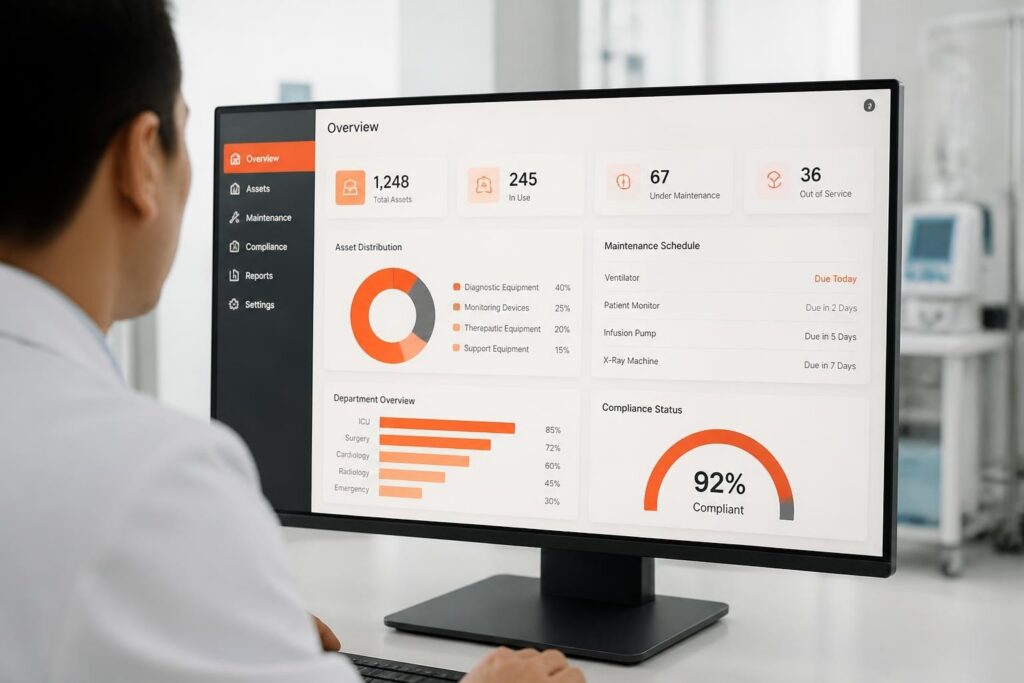
Contractor compliance software automates the verification, tracking, and documentation of external workers’ credentials, insurance, certifications, and contractual obligations to ensure organizations meet regulatory requirements and reduce misclassification risk. Organizations that rely on contingent labor face increasing scrutiny from tax authorities, labor regulators, and industry watchdogs. Manual spreadsheets and email chains create gaps in documentation, missed renewal deadlines, and audit failures. Purpose-built platforms centralize contractor data, enforce verification workflows, and maintain compliance audit trails across the worker lifecycle.
TL;DR:
- Contractor compliance software centralizes credential verification, insurance tracking, and worker classification documentation in a single system
- Automated alerts prevent expired certifications, lapsed insurance policies, and missed contract renewals that create liability exposure
- Integration with payroll, procurement, and HR systems ensures consistent data and reduces duplicate entry across departments
- Audit-ready reporting generates compliance documentation for OSHA, IRS, DOL, and industry-specific regulatory reviews
- Real-time dashboards highlight non-compliant contractors before they access facilities or begin work assignments
What Is Contractor Compliance Software?
Contractor compliance software is a digital platform that manages the complete lifecycle of third-party worker compliance-from initial vetting and onboarding through ongoing monitoring and offboarding. The system enforces mandatory checks before access approval, tracks time-sensitive credentials, and documents every compliance decision for regulatory defense.
Core functionality includes worker classification assessment tools, document collection workflows, expiration monitoring, background check integration, insurance certificate verification, and compliance reporting dashboards. Unlike generic contract management systems, these platforms specifically address the regulatory and operational requirements of managing human capital vendors rather than procurement contracts for goods or services.

Organizations in construction, healthcare, manufacturing, and financial services deploy these systems to satisfy NIST supply chain risk management expectations, OSHA safety requirements, and state labor law mandates. The software creates defensible documentation when agencies question worker status or when incidents trigger investigations.
Key Components of Contractor Compliance Platforms
| Component | Function | Business Impact |
|---|---|---|
| Classification engine | Applies IRS and DOL tests to worker arrangements | Reduces misclassification penalties averaging $25,000 per worker |
| Credential vault | Stores licenses, certifications, training records with expiration tracking | Prevents unauthorized work by unqualified contractors |
| Insurance verification | Validates COI authenticity and coverage limits against contract requirements | Closes insurance gaps that create liability exposure |
| Access control integration | Links compliance status to badge systems and facility access | Blocks non-compliant contractors at entry points automatically |
| Audit trail logging | Records every verification decision, override, and status change | Provides regulatory defense documentation during investigations |
The IRS guidance on worker classification establishes behavioral control, financial control, and relationship type as determining factors. Contractor compliance software codifies these criteria into assessment questionnaires that document classification rationale before engagement begins.
Why Do Organizations Need Contractor Compliance Software?
Manual contractor management creates systematic compliance failures. Spreadsheets don’t send alerts when certifications expire. Email-based document collection leaves gaps when contractors ignore requests. Decentralized filing makes audit preparation a scramble across departments.
Regulatory enforcement has intensified. The U.S. Department of Labor recovered $274 million in back wages during fiscal year 2023 related to misclassification violations. State agencies add their own penalties. California’s AB 5 and similar statutes impose successor liability on companies that misclassify workers, even unintentionally.
Operational Risk Without Compliance Automation
Organizations managing contractors through manual processes face:
- Expired credentials going unnoticed until incidents occur or audits reveal gaps
- Insurance lapses between policy renewal and certificate delivery to contract administrators
- Inconsistent classification decisions when multiple hiring managers apply different criteria to similar roles
- Incomplete onboarding records scattered across procurement, HR, legal, and facility management systems
- Audit failures due to inability to quickly produce compliant documentation for all active contractors
Financial services firms must satisfy interagency third-party risk management guidance that mandates ongoing monitoring and documented oversight of all service providers, including contractors. Healthcare organizations need Joint Commission-compliant credentialing for contract clinical staff. Construction firms face OSHA 300 log requirements that include contractor injuries.
Brytend’s expertise in compliance risk software helps organizations design systems that meet industry-specific regulatory requirements while integrating with existing business platforms. Custom solutions address unique compliance workflows that off-the-shelf tools cannot accommodate.
Cost of Non-Compliance vs. Software Investment
| Compliance Failure | Average Cost per Incident | Software Prevention Method |
|---|---|---|
| Misclassification penalty | $25,000 per worker (IRS) + state penalties | Classification assessment with documented rationale |
| Expired license incident | $50,000–$500,000 (varies by industry) | Automated expiration alerts 90/60/30 days before lapse |
| Insurance coverage gap claim | $100,000–$1M+ | Real-time COI verification against contract requirements |
| OSHA violation (untrained contractor) | $7,000–$15,625 per violation | Training completion tracking and access denial for non-compliant workers |
| Audit documentation gap | $10,000–$100,000 in legal/consulting fees | Centralized audit trail with one-click report generation |
Enterprise contractor compliance platforms cost $15,000–$75,000 annually depending on contractor volume and feature requirements. A single avoided misclassification penalty typically covers three to five years of software costs.
How Does Contractor Compliance Software Work?
Contractor compliance software operates across four lifecycle phases: pre-engagement assessment, onboarding and verification, ongoing monitoring, and offboarding documentation. Each phase enforces mandatory controls and creates audit documentation.
Phase 1: Pre-Engagement Assessment
Before contract execution, the system presents hiring managers with a classification questionnaire based on IRS Common Law factors. Questions address:
- Behavioral control – Does the company direct how, when, and where the worker performs tasks?
- Financial control – Does the worker have unreimbursed expenses, opportunity for profit/loss, and services available to other clients?
- Relationship type – Is there a written contract describing an independent business relationship? Are benefits provided? Is the work ongoing or project-specific?
The software scores responses and flags high-risk arrangements for legal review before engagement. This documentation demonstrates good-faith classification efforts if agencies later challenge worker status.

Systems integrated with procurement platforms automatically trigger classification assessments when requisitions contain specific service categories or individual worker arrangements rather than deliverable-based contracts.
Phase 2: Onboarding and Verification
Approved contractors receive automated portal invitations to submit required documentation. The platform enforces completion gates-contractors cannot proceed to the next step until previous requirements are satisfied.
Required documentation typically includes:
- W-9 or W-8BEN tax forms with TIN verification
- Professional licenses or industry certifications with issuing authority validation
- Insurance certificates (general liability, professional liability, workers’ compensation) with coverage limits meeting contract thresholds
- Background check authorization and results (if required by contract or regulation)
- Safety training completion certificates for facility access
- Signed contracts, MSAs, NDAs, and policy acknowledgments
The system validates document authenticity through third-party data services. Insurance certificates are checked against carrier databases to confirm active policies. License numbers are verified against state licensing boards. Social Security numbers are validated through IRS TIN matching programs.
Phase 3: Ongoing Monitoring
After onboarding, the platform monitors credential expiration dates, insurance renewals, and periodic revalidation requirements. Automated workflows trigger:
- 90-day advance notices to contractors and contract administrators when credentials approach expiration
- Access suspension for contractors whose required documents lapse
- Escalation alerts to legal or compliance teams when contractors ignore renewal reminders
- Periodic reassessment of classification factors if engagement scope or terms change materially
Integration with facility access control systems automatically disables badge access for contractors who fall out of compliance. This prevents unauthorized work by individuals whose certifications or insurance have expired.
Workflow automation software capabilities allow organizations to define custom escalation paths, approval hierarchies, and remediation timelines based on contractor risk tier and engagement type.
Phase 4: Offboarding Documentation
When contractor engagements end, the system archives all compliance records with timestamps, creates final status reports, and disables system access. Retention periods follow regulatory requirements-typically seven years for tax-related classification documentation, three years for OSHA records, and varying periods for industry-specific credentials.
Final offboarding reports document:
- Total engagement duration and scope changes over time
- Compliance status at engagement end (all requirements current vs. outstanding gaps)
- Incident history (safety events, policy violations, access exceptions)
- Final payment reconciliation and tax form generation
This documentation is critical for defending worker classification if tax authorities audit historical engagements years after contractor relationships end.
What Features Should Contractor Compliance Software Include?
Comprehensive contractor compliance platforms combine regulatory requirement libraries, automated verification workflows, integration capabilities, and reporting tools. Feature requirements vary by industry and organizational size, but core functionality applies across use cases.
Essential Feature Categories
Credential and Document Management
- Centralized document repository with version control and audit logging
- Automated expiration tracking for time-limited credentials
- Template libraries for required contractor forms and acknowledgments
- Digital signature collection and execution tracking
- Multi-party approval workflows for high-risk engagements
Verification and Validation
- TIN validation against IRS databases
- Insurance certificate verification through carrier integration or third-party services
- License verification against state and professional licensing boards
- Background check integration with consumer reporting agencies
- Right-to-work and I-9 verification for contractor employees who will work on-site
Risk Assessment and Monitoring
- Worker classification scoring based on regulatory guidance and case law
- Risk tier assignment based on engagement value, duration, and scope
- Continuous insurance monitoring with automatic alerts for policy cancellations
- Periodic reassessment triggers for long-term engagements
- Vendor risk scoring that considers compliance history, incident rates, and responsiveness
Integration and Data Exchange
Organizations need contractor compliance data integrated across multiple business systems. Key integration points include:
| System Type | Integration Purpose | Data Exchanged |
|---|---|---|
| Vendor management (VMS) | Sync contractor records and status | Contractor profiles, compliance flags, approval status |
| Procurement/AP | Prevent payment to non-compliant vendors | Compliance status, active contractor list, payment blocks |
| Access control | Link compliance to facility entry | Compliance status, credential expiration, access authorization |
| Payroll | Ensure proper tax treatment and reporting | Classification status, tax forms, payment terms |
| HR information systems | Coordinate benefits, policies, training | Contractor vs. employee status, onboarding completion |
API capabilities enable real-time data synchronization rather than nightly batch updates. This prevents scenarios where newly non-compliant contractors receive building access or payments before status updates propagate across systems.
Financial institutions subject to regulatory guidance on third-party relationships require comprehensive integration to demonstrate continuous monitoring and timely response to compliance changes.
Reporting and Analytics
Audit-ready reporting generates documentation on demand for regulatory reviews, internal audits, and legal discovery. Standard report types include:
- Compliance status dashboard showing percentage of contractors current on all requirements by department, location, and risk tier
- Expiring credentials report listing all credentials expiring in the next 30/60/90 days with responsible parties
- Non-compliant contractor listing identifying contractors currently blocked from work due to missing or expired requirements
- Classification audit report documenting assessment results, approvals, and periodic reviews for all contractor engagements
- Historical engagement summary providing complete compliance timeline for any contractor relationship
Advanced platforms offer predictive analytics that identify compliance risk patterns-departments with consistently late renewals, contractors with repeated documentation gaps, or credential types with systemic verification delays.
How Do You Implement Contractor Compliance Software Successfully?
Implementation success depends on comprehensive requirement definition, data migration planning, integration architecture, user training, and phased rollout. Organizations that treat implementation as a technical deployment rather than a business process transformation face adoption failures and compliance gaps.
Implementation Phase Breakdown
Phase 1: Requirement Definition and System Selection (Weeks 1-4)
- Document current contractor compliance workflows across all departments
- Identify regulatory requirements specific to your industry and jurisdictions
- Map required credentials, insurance types, and verification methods by contractor category
- Define compliance risk tiers and corresponding control requirements
- Establish integration requirements with existing business systems
Involve stakeholders from procurement, HR, legal, compliance, facilities, and line-of-business leaders who manage contractors. Each group has visibility into different compliance failures and operational pain points.
Phase 2: Data Migration and System Configuration (Weeks 5-10)
Organizations typically have contractor data scattered across procurement systems, spreadsheets, shared drives, and email. Migration requires:
- Data cleansing to identify and merge duplicate contractor records
- Historical document collection from current contractors to populate the credential vault
- Classification review of existing contractors to ensure proper status documentation
- Risk tier assignment based on engagement type, value, and regulatory exposure
- Baseline compliance assessment to understand current state and identify immediate gaps
Custom software development expertise helps organizations with unique compliance requirements or complex legacy systems. Brytend builds tailored migration tools and custom modules that address industry-specific compliance needs standard platforms cannot accommodate.
Phase 3: Integration Development (Weeks 8-14, overlapping with Phase 2)
API integration with vendor management, procurement, access control, and HRIS systems requires careful data mapping and error handling design. Critical integration considerations include:
- Real-time vs. batch synchronization for different data types based on operational impact
- Conflict resolution logic when systems disagree about contractor status
- Fallback procedures when integration services are unavailable
- Security controls for sensitive data transmission and API authentication
Test integrations with production data copies to identify edge cases and data quality issues before go-live.
Phase 4: User Training and Pilot Rollout (Weeks 12-16)
Train users by role with specific workflow focus:
- Hiring managers – How to initiate contractor requests and complete classification assessments
- Contract administrators – How to onboard contractors, review documents, and manage renewals
- Facility managers – How to verify compliance before granting access
- Accounts payable – How to check compliance status before processing payments
- Compliance officers – How to run reports, investigate exceptions, and prepare for audits
Pilot with a single business unit or contractor category to validate workflows before enterprise rollout. Use pilot feedback to refine configurations, approval paths, and notification timing.
Phase 5: Full Rollout and Continuous Improvement (Weeks 17+)
After successful pilot, roll out to remaining business units in waves. Maintain legacy systems in read-only mode for historical reference until retention periods expire.
Track key performance indicators to measure compliance improvement:
- Percentage of contractors current on all required credentials
- Average time from compliance lapse to resolution
- Number of access denials due to expired credentials (demonstrates control effectiveness)
- Audit finding reduction compared to pre-implementation baseline
- Time required to produce audit documentation (should drop from days to minutes)
Organizations handling contractor software development or IT service delivery should review CISA guidance on securing the software supply chain to ensure contractor compliance extends to deliverable security and transparency requirements.
What Are Common Mistakes in Contractor Compliance Management?
Organizations implementing contractor compliance software frequently make configuration, process design, and governance errors that undermine compliance effectiveness. Understanding these failures helps teams avoid them during design and rollout.
Configuration and Scope Errors
Incomplete credential requirements occur when organizations configure only the most obvious compliance needs (insurance, W-9) but miss industry-specific or role-specific requirements. Construction contractors may need OSHA 10/30 training, respirator fit tests, and fall protection certification. Healthcare contractors need credentialing verification, immunization records, and background checks. Financial services contractors require FINRA registrations or security clearances.
Build comprehensive requirement matrices by contractor type before configuration. Review regulatory guidance, contract templates, insurance policies, and historical incident reports to identify all mandatory credentials.
Overly rigid workflows that don’t accommodate legitimate exceptions create workarounds that bypass controls entirely. A platform that requires 100% document completion before any access creates pressure to grant manual overrides when business needs are urgent. Better design includes risk-based expedited paths for low-risk contractors with post-access document collection requirements and enhanced monitoring.
Missing integration between compliance status and business systems allows non-compliant contractors to continue receiving access, assignments, and payments. If compliance software operates as a standalone system without API connections to procurement, access control, and AP systems, it becomes a reporting tool rather than a control mechanism.
Process and Governance Failures
Organizations frequently fail to define clear ownership and escalation paths for compliance issues. When a contractor’s insurance lapses, who is responsible for follow-up? At what point does non-response escalate to legal or procurement? Without defined SLAs and escalation procedures, contractors remain in limbo while different departments assume someone else is handling the issue.
Inadequate contractor communication during onboarding creates documentation delays. Generic portal invitations without context about why specific credentials are required, how to obtain them, or consequences for non-compliance result in low response rates. Effective communication includes requirement justification, step-by-step guidance, contact information for questions, and clear deadlines with consequences.
Failure to validate classification decisions periodically allows engagements to drift from original scope without reassessment. A contractor initially engaged for a three-month project may extend to years with expanding responsibilities that change classification factors. Platforms should trigger automatic reassessment when engagement duration, payment terms, or scope changes materially.
Audit Preparation Gaps
The purpose of contractor compliance software is defensible documentation during regulatory reviews. Common documentation failures include:
- Incomplete audit trails that don’t log who approved exceptions, when, and based on what justification
- Missing classification rationale when decisions were made verbally or in email rather than in the system
- Inadequate retention of historical documents after contractors offboard
- Inconsistent application of policies across business units or contractor tiers
Expedited Arbitration Services provides alternative dispute resolution when contractor classification or compliance disputes arise, offering a faster and more cost-effective path than traditional litigation for resolving worker status disagreements.
Run mock audits quarterly using the same documentation requests regulators would make. If you cannot produce compliant documentation within hours for any active or recent contractor, you have coverage gaps that need remediation.
How Does Contractor Compliance Software Compare to Manual Processes?
Organizations managing fewer than 20 contractors sometimes question whether software investment is justified compared to spreadsheet-based processes. The comparison depends on regulatory risk exposure, contractor turnover rate, credential complexity, and audit frequency.
Manual Process Limitations
| Manual Method | Failure Mode | Business Consequence |
|---|---|---|
| Spreadsheet tracking | No automatic expiration alerts; requires manual calendar review | Credentials expire unnoticed until incident or audit |
| Email document collection | No proof of delivery; contractors ignore requests; documents lost | Incomplete files discovered during audits |
| Shared drive storage | No access controls; no version tracking; no search capability | Wrong document versions used; unable to find records quickly |
| Paper-based filing | Physical storage requirements; no remote access; deterioration risk | Audit preparation requires days of physical file review |
| Manual classification assessment | Inconsistent application; no documentation of decision rationale | Indefensible in IRS or DOL audits |
Manual processes scale poorly. An organization with 50 contractors and 5 required credentials per contractor manages 250 expiration dates. At 100 contractors, that becomes 500 dates. Spreadsheets don’t automatically notify anyone 60 days before expiration. Hiring an administrator to manually track expirations costs more than software while providing less reliable results.
Software Advantages Beyond Automation
Contractor compliance platforms provide capabilities manual processes cannot replicate:
Automatic validation against authoritative sources – Insurance certificate details verified against carrier databases in real-time, catching fraudulent or cancelled policies that visual inspection misses.
Consistent policy application – The system applies the same classification criteria and document requirements to every contractor regardless of which hiring manager makes the request, eliminating favoritism and ad-hoc exceptions.
Immediate compliance visibility – Dashboards show executive leadership the percentage of contractors currently compliant, trends over time, and high-risk areas requiring attention. Spreadsheets require manual analysis to answer these questions.
Contractor self-service – Portals shift administrative burden from internal staff to contractors who upload their own documents, track their own expiration dates, and receive direct notifications about missing requirements.
Defensible audit trails – Every decision, approval, override, and document view is logged with timestamp and user identity. This creates legally defensible evidence of compliance efforts.
Organizations subject to critical infrastructure cybersecurity expectations need documented third-party risk management programs that manual processes cannot adequately demonstrate during regulatory reviews.
ROI Calculation Framework
Calculate contractor compliance software ROI by quantifying:
Risk reduction value:
- Average penalty per compliance violation × likelihood of violation × number of contractors = annual expected loss
- Insurance premium reduction from demonstrated third-party risk controls
- Reduced legal fees for classification audits and disputes
Operational efficiency gains:
- Administrator time saved × hourly cost × hours per week
- Faster onboarding (reduced time-to-productivity for contractors)
- Reduced audit preparation effort (hours saved × billing rate for external auditors or consultants)
Incident cost avoidance:
- Cost per safety incident × incident rate reduction from credential verification
- Liability claim costs avoided through proper insurance verification
For a mid-size organization managing 200 contractors with 10 hours per week of administrator effort at $50/hour, annual labor savings alone total $26,000-often covering software costs before factoring in risk reduction and incident avoidance.

What Industries Benefit Most from Contractor Compliance Software?
While any organization using contractors gains compliance benefits, certain industries face heightened regulatory scrutiny, complex credentialing requirements, or severe penalties for compliance failures that make purpose-built platforms essential rather than optional.
Construction and Field Services
Construction firms manage dozens to hundreds of subcontractors across multiple jobsites, each requiring:
- Trade-specific licenses and certifications
- OSHA safety training (OSHA 10, OSHA 30, specialized certifications)
- Equipment operation certifications
- General liability and workers’ compensation insurance with project-specific additional insured endorsements
- Prevailing wage compliance for government contracts
Safety compliance is critical. OSHA recordkeeping requirements mandate tracking contractor injuries on site. Failure to verify contractor safety training before access creates direct liability for the general contractor. Software prevents unauthorized work by unqualified subcontractors and maintains required documentation for OSHA inspections.
Healthcare and Clinical Services
Healthcare organizations credentialing contract physicians, nurses, therapists, and allied health professionals need:
- Professional license verification through primary source
- Board certification validation
- Malpractice insurance with minimum coverage limits
- Clinical privilege delineation matching actual scope of practice
- Background checks and exclusion list screening (OIG, SAM, state Medicaid)
- Ongoing monitoring for license discipline or sanctions
Joint Commission accreditation standards require medical staff credentialing processes that include initial verification, periodic reappointment, and ongoing professional practice evaluation. Contractor compliance platforms designed for healthcare include credential verification organization (CVO) integration and standardized privilege dictionaries.
Financial Services
Banks, broker-dealers, and payment processors engaging contractors for technology services, compliance consulting, or operational support must satisfy regulatory expectations for third-party risk management. Requirements include:
- Background checks for contractors with system access or customer data exposure
- Security training and acknowledgment of information security policies
- Assessment of contractor cybersecurity controls
- Documented oversight and ongoing monitoring
- Incident response and business continuity obligations in contracts
The interagency guidance on third-party risk management establishes supervisory expectations that apply to contractor relationships. Financial institutions need documented evidence of planning, due diligence, contract controls, and ongoing monitoring across the third-party lifecycle.
Manufacturing and Industrial Operations
Manufacturers using contract labor for maintenance, equipment installation, or specialized production processes need:
- Industry-specific safety certifications (confined space, lockout/tagout, hot work)
- Equipment-specific training and qualifications
- Security clearances for defense contractors
- Environmental compliance training
- Quality system awareness and ITAR compliance for export-controlled work
Contract workers performing maintenance on critical equipment require documented qualifications before authorization. A pump failure caused by an unqualified contractor creates liability, production downtime, and potential regulatory violations if the equipment relates to environmental compliance or worker safety systems.
Organizations with serialized equipment or assets can benefit from integrated service documentation. The Brytend Service Module provides structured tracking of equipment service history, including documentation of contractor qualifications for technicians performing work on specific assets.

Contractor compliance software transforms third-party workforce management from reactive documentation to proactive risk mitigation by automating verification workflows, enforcing mandatory controls, and creating defensible audit trails. Organizations reduce misclassification penalties, prevent credential gaps, and demonstrate regulatory compliance through centralized platforms integrated with procurement, access control, and business systems.
FAQs
What is contractor compliance software used for?
Contractor compliance software manages third-party worker verification, documentation, monitoring, and offboarding throughout the engagement lifecycle. Core functions include classification assessments, license tracking, insurance validation, background checks, and audit reporting. Automated alerts commonly begin 90 days before credential expiration. Tax-related classification records are typically retained for 7 years.
How does contractor compliance software work?
Contractor compliance software works through four phases: assessment, onboarding, monitoring, and offboarding. The platform collects documents, verifies credentials, tracks insurance, and records approval decisions. Automated reminders commonly trigger 90, 60, and 30 days before expiration. Integrations can suspend facility access when required documentation becomes invalid.
How much does contractor compliance software cost?
Contractor compliance software typically costs $15,000 to $75,000 annually, depending on contractor volume and features. A single misclassification penalty averages approximately $25,000 per worker. Organizations can estimate return through labor savings, avoided penalties, reduced audit costs, and fewer insurance-related incidents. One avoided penalty may cover three to five years of software costs.
How does contractor compliance software compare with manual processes?
Contractor compliance software provides automated alerts, centralized records, consistent workflows, and audit trails that manual processes generally lack. Managing 50 contractors with five credentials each creates 250 expiration dates. Spreadsheets require manual monitoring, while software can notify responsible users automatically. Integrated platforms also block access, assignments, or payments for non-compliant contractors.
Can any organization use contractor compliance software?
Yes, any organization using external workers can use contractor compliance software to manage credentials, insurance, classification, and regulatory documentation. Construction, healthcare, manufacturing, and financial services face especially complex requirements. Healthcare organizations may need license and sanction monitoring, while construction firms often track OSHA 10 or OSHA 30 training.
How long does contractor compliance software implementation take?
Contractor compliance software implementation commonly takes at least 17 weeks for enterprise deployments. Requirements and selection may take weeks 1 through 4, while migration typically spans weeks 5 through 10. Integration development often overlaps through week 14. Training and pilot rollout generally occur during weeks 12 through 16.
What features should contractor compliance software include?
Contractor compliance software should include classification assessments, document storage, expiration alerts, insurance verification, access controls, integrations, and audit reporting. Essential systems validate tax identification numbers, licenses, and coverage limits. Real-time dashboards should identify non-compliant workers before access. Standard reports commonly show requirements expiring within 30, 60, or 90 days.
If your organization needs custom contractor compliance capabilities tailored to specific regulatory requirements, industry workflows, or integration needs that standard platforms don’t address, Brytend builds software solutions designed for your exact compliance challenges. Our team develops platforms that automate your unique verification processes, integrate with your existing systems, and scale as your contractor workforce grows.