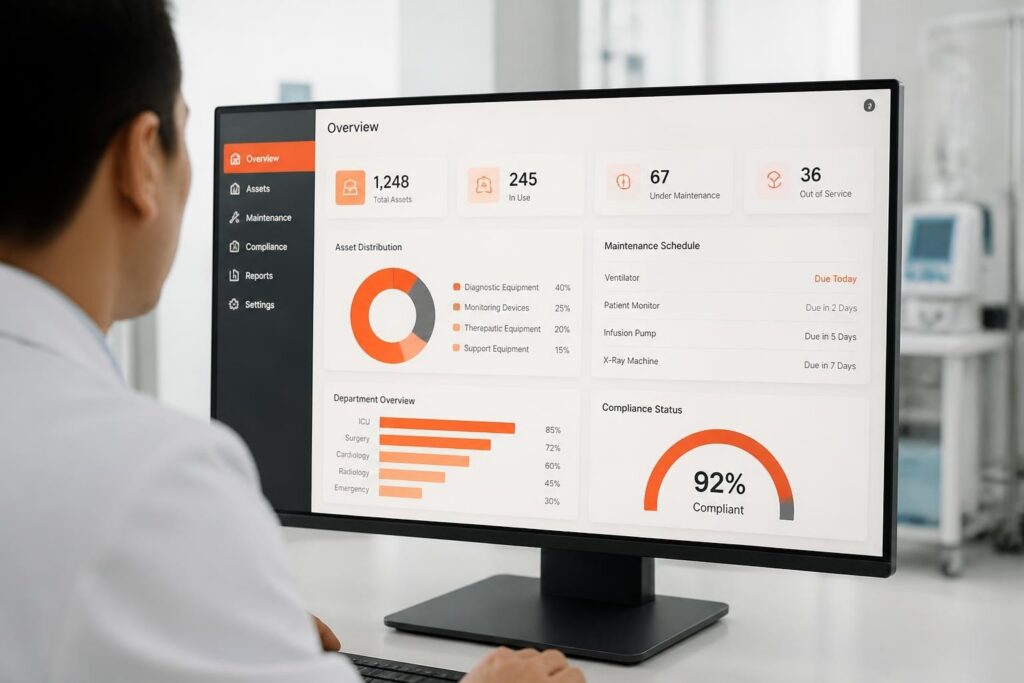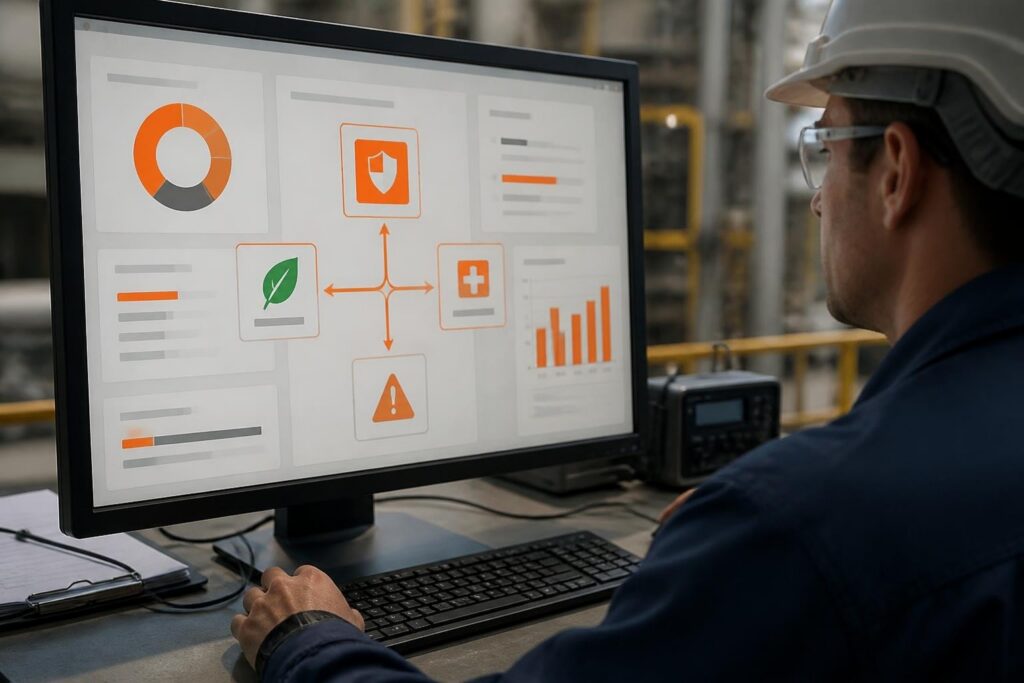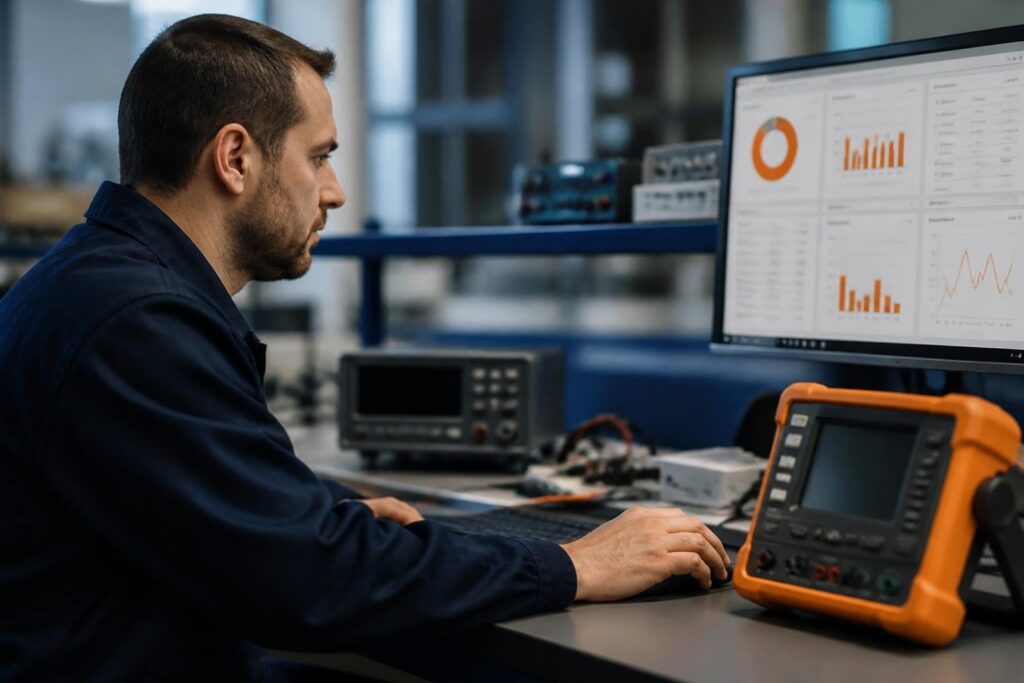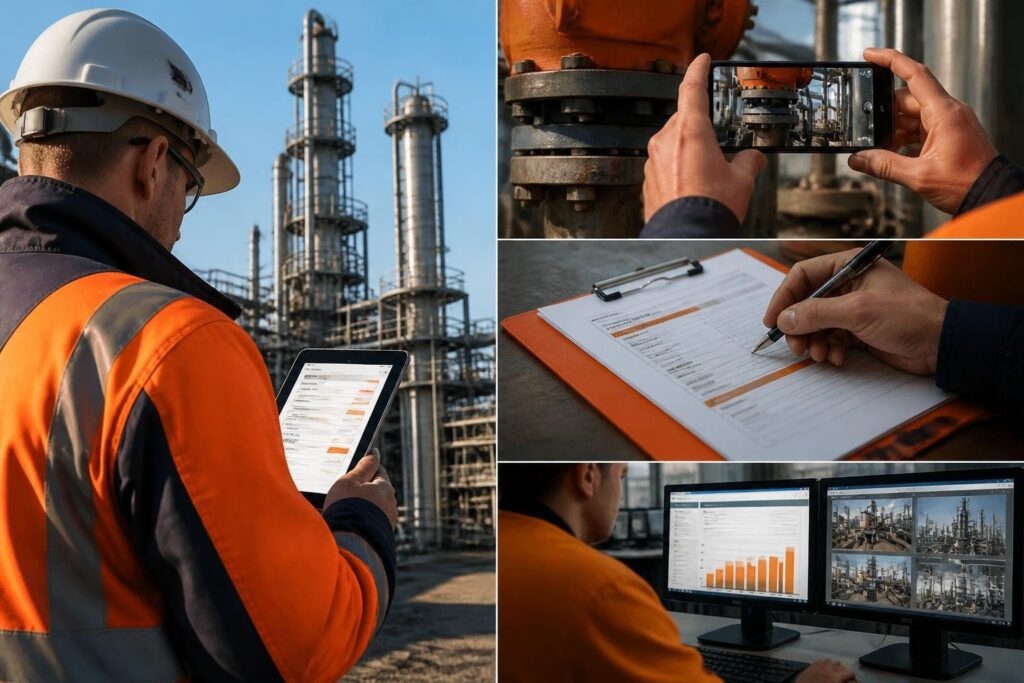
Equipment tracking software automates the process of identifying, locating, and managing physical assets throughout their lifecycle by assigning unique identifiers and maintaining digital records of condition, location, service history, and utilization.
TL;DR:
- Equipment tracking software creates serialized digital identities for physical assets and maintains real-time location and status data
- Core capabilities include barcode/RFID scanning, GPS tracking, automated maintenance scheduling, and audit trail documentation
- Manual tracking methods cost organizations 15-20% more in operational expenses due to lost equipment, duplicate purchases, and compliance failures
- Effective systems integrate with existing ERP, CMMS, and procurement platforms to eliminate duplicate data entry
- ROI typically appears within 6-12 months through reduced asset loss, improved utilization rates, and lower maintenance costs
What Is Equipment Tracking Software and How Does It Work?
Equipment tracking software is a digital platform that assigns unique identifiers to physical assets and maintains centralized records of their location, condition, service history, utilization, and associated costs. The system creates a serialized inventory where each piece of equipment has its own digital identity.
The fundamental workflow begins with asset registration. Each item receives a unique identifier-serial number, barcode, QR code, or RFID tag. This identifier links the physical object to its digital record in the database. Users scan or manually enter this identifier during check-in, check-out, transfer, service, or inspection events.
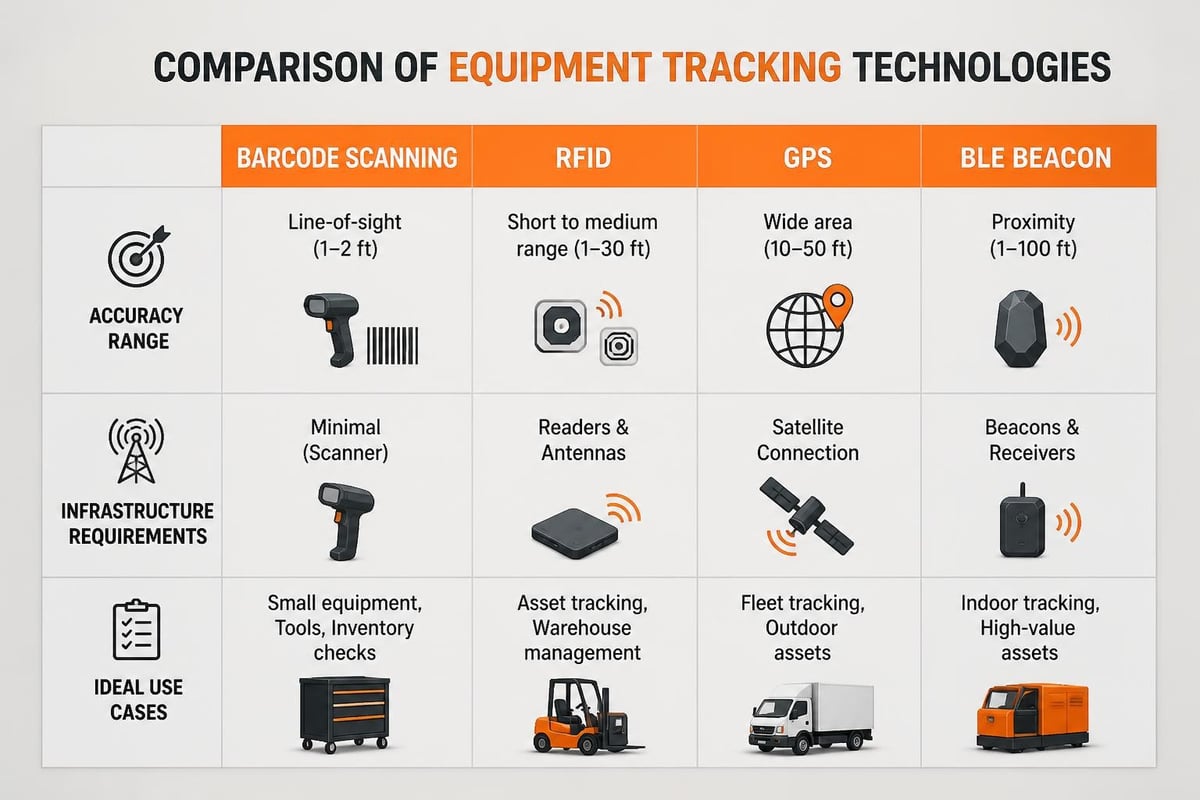
Location tracking occurs through multiple methods depending on requirements. Indoor facilities typically use barcode scanning at checkpoints, RFID readers at doorways, or Bluetooth Low Energy (BLE) beacons for zone-level positioning. Outdoor or mobile equipment uses GPS trackers that transmit coordinates at defined intervals. The Bluetooth SIG 2024 Market Update documents how BLE-based real-time location systems (RTLS) have become standard for commercial asset tracking deployments.
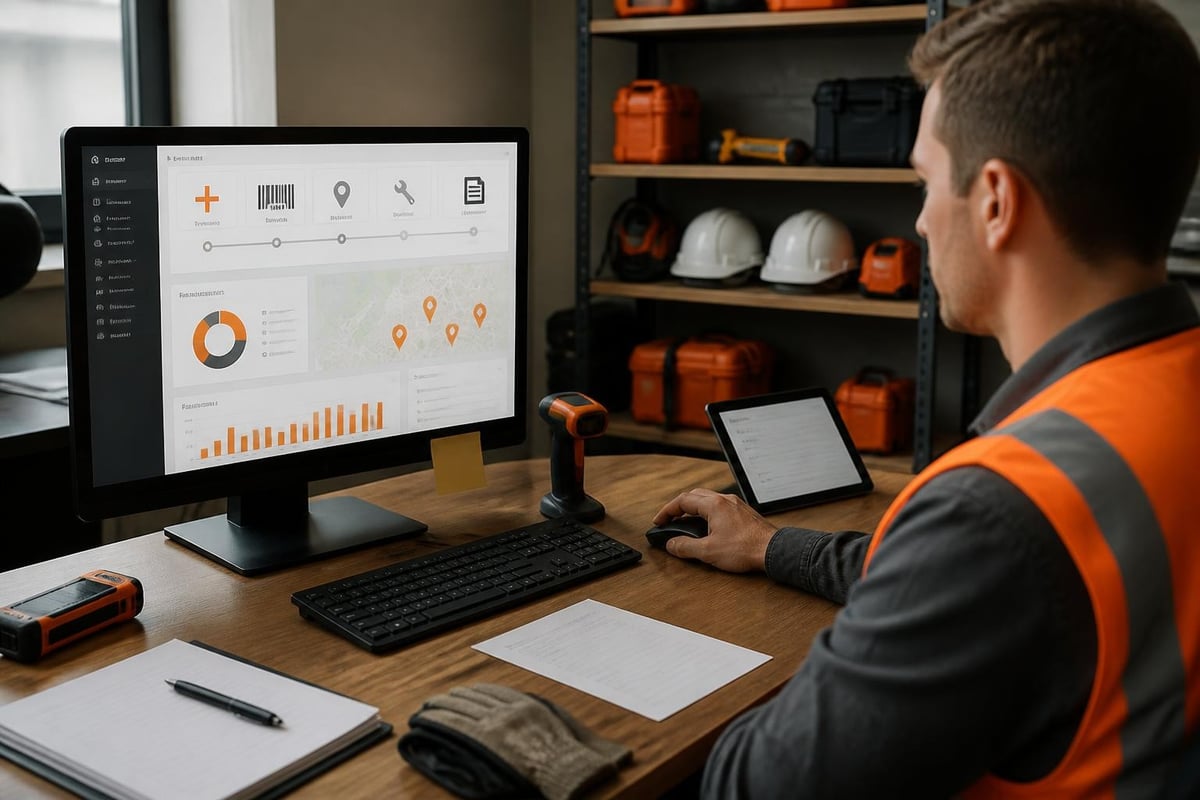
The database stores complete lifecycle information:
- Acquisition data: purchase date, vendor, cost, warranty terms, expected lifespan
- Location history: current location, transfer dates, custody chain, zone assignments
- Maintenance records: service dates, technician notes, parts replaced, labor hours, next scheduled service
- Utilization metrics: hours operated, projects assigned, idle time, reservation calendar
- Compliance documentation: inspection certificates, calibration records, safety audit results
Automated workflows trigger based on defined rules. When equipment reaches scheduled service intervals, the system generates work orders. When items leave designated zones without authorization, alerts notify supervisors. When warranties approach expiration, procurement receives renewal notifications.
Why Do Organizations Need Equipment Tracking Software?
Manual asset management creates systematic inefficiencies that compound over time. Spreadsheets and paper logs cannot provide real-time visibility, enforce data quality standards, or scale across multiple facilities and user groups.
Lost and misplaced equipment represents the most immediate financial impact. Studies show organizations without automated tracking systems spend 15-25% of equipment value annually replacing items that are lost, stolen, or simply unlocated within their own facilities. A construction company with $500,000 in tool inventory could lose $75,000-$125,000 per year to these preventable costs.
Duplicate purchases occur when procurement teams lack visibility into existing inventory. Without centralized records, departments purchase redundant equipment because they cannot determine what the organization already owns or where it is located. Equipment tracking software eliminates this waste by providing searchable, real-time inventory across all locations.
Maintenance compliance failures expose organizations to safety risks, regulatory penalties, and equipment failures. Critical assets require service at specific intervals based on hours operated, calendar time, or usage cycles. Manual tracking methods cannot reliably alert teams when service is due, particularly across large fleets or geographically distributed operations.
| Manual Tracking | Equipment Tracking Software |
|---|---|
| 15-25% annual asset loss rate | 2-5% annual asset loss rate |
| 40-60 minutes per physical inventory count | 5-10 minutes per digital inventory scan |
| Reactive maintenance (after failure) | Preventive maintenance (scheduled intervals) |
| Paper records vulnerable to loss | Cloud-based records with backup and audit trail |
| Limited reporting capability | Real-time dashboards and custom analytics |
Compliance documentation requirements across industries mandate traceable records. The NIST guidance on automated asset inventory establishes security frameworks that require organizations to maintain accurate, current inventories of operational technology and IT assets. Equipment tracking software creates the audit trail necessary to demonstrate compliance during regulatory inspections.
Utilization optimization becomes possible only with usage data. Organizations often own more equipment than necessary because they cannot measure actual utilization rates. Tracking software reveals which assets sit idle, enabling better allocation, rental decisions, or disposition of underutilized items.
What Features Should Equipment Tracking Software Include?
Core functionality separates basic inventory databases from comprehensive tracking platforms. Organizations should evaluate capabilities across six functional areas.
Asset Registration and Serialization
The system must support unique identification for every trackable item. This includes:
- Automated serial number generation following organizational standards
- Barcode and QR code printing directly from the application
- RFID tag encoding and association with asset records
- Bulk import capabilities for existing inventory data
- Custom field definition to capture equipment-specific attributes
Effective serialization creates one-to-one relationships between physical items and digital records. Generic entries like “5 laptops” provide no tracking value. Each laptop needs its own serial number, assignment history, and service record.
Real-Time Location Tracking
Location capabilities vary by technology and use case:
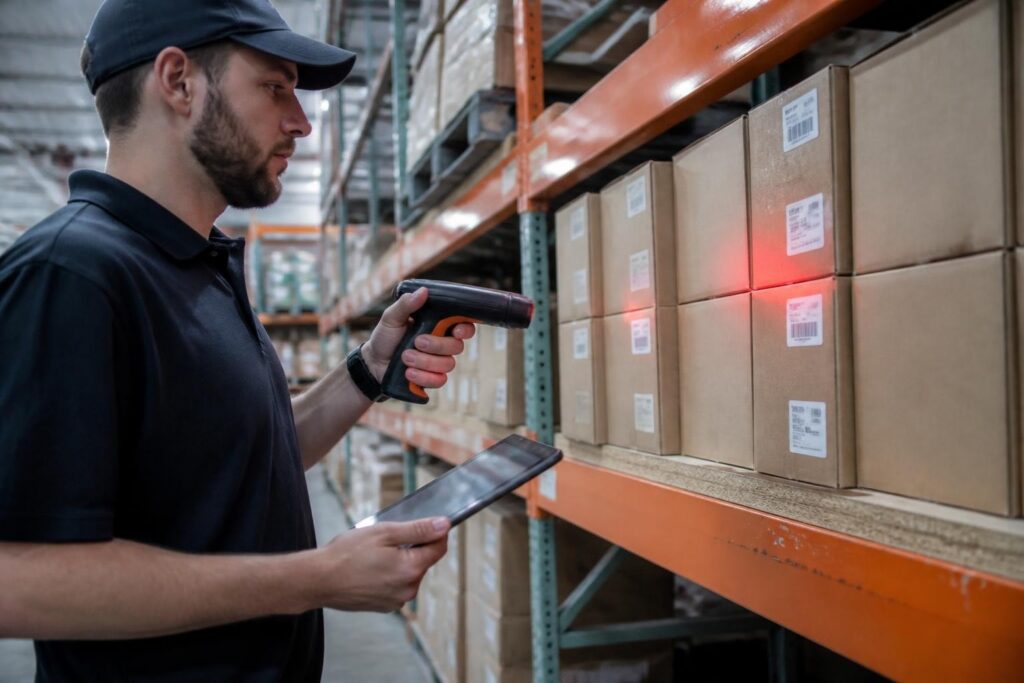
Barcode/QR scanning provides checkpoint-based tracking. Users scan assets during movement, creating location history but not continuous positioning. This approach works well for controlled environments where equipment moves through defined processes.
RFID readers enable passive detection when tagged items pass through doorways or checkpoints. No manual scanning required. The Oak Ridge National Laboratory review analyzes RFID alongside GPS, UWB, and other wireless technologies for industrial asset tracking applications.
GPS trackers provide outdoor positioning for vehicles, trailers, and mobile equipment. Cellular or satellite connectivity transmits coordinates to the central database.
BLE beacons offer indoor positioning by triangulating signal strength from multiple beacons. Accuracy typically ranges from 1-5 meters depending on beacon density and environmental factors.
Maintenance Management Integration
Equipment tracking software should automate service scheduling and documentation:
- Configurable maintenance intervals based on calendar time, operating hours, or usage cycles
- Automated work order generation when service becomes due
- Mobile access for technicians to update service records in the field
- Parts inventory tracking linked to specific maintenance events
- Service history reports showing total cost of ownership per asset
The Brytend Service Module demonstrates how serialized inventory connects with automated service reminders and certificate generation to create complete equipment lifecycle management.
Organizations implementing this capability reduce unplanned downtime by 30-45% through preventive maintenance scheduling. Equipment lifespan extends 20-35% when service occurs at manufacturer-recommended intervals rather than after failures.
Check-In/Check-Out and Custody Tracking
Accountability requires documenting who has possession of each asset:
- User authentication through employee ID, badge scan, or biometric verification
- Reservation calendars to prevent scheduling conflicts
- Automated reminders when return dates approach
- Restriction rules that prevent unauthorized personnel from accessing specific equipment categories
- Complete custody chain documentation for audit purposes
This functionality proves essential for regulated industries, shared tool cribs, IT asset management, and any scenario where equipment moves between users or locations.
Reporting and Analytics
Data becomes actionable through structured reporting:
- Real-time dashboards showing asset locations, utilization rates, and maintenance status
- Depreciation tracking aligned with accounting standards
- Total cost of ownership calculations including acquisition, maintenance, and disposal costs
- Utilization analysis identifying underused assets
- Compliance reports documenting inspection completion and certification status
- Custom report builders for organization-specific metrics
Export capabilities should support standard formats (CSV, Excel, PDF) and provide API access for integration with business intelligence platforms.
Mobile Accessibility
Field operations require mobile-first functionality:
- Native iOS and Android applications for offline operation
- Camera integration for barcode scanning without dedicated hardware
- Photo capture to document asset condition during inspections
- Digital signature collection for transfer approvals
- GPS coordinate capture for outdoor asset location updates
How Do You Calculate ROI for Equipment Tracking Software?
Return on investment analysis compares implementation costs against quantified benefits. Organizations typically achieve positive ROI within 6-12 months.
Implementation costs include:
- Software licensing: $50-$500 per user per month for cloud platforms, or $10,000-$100,000+ for on-premise deployments
- Hardware: $25-$100 per barcode scanner, $5-$15 per RFID tag, $50-$200 per GPS tracker, $30-$80 per BLE beacon
- Integration: $5,000-$50,000 for connecting with existing ERP, CMMS, or procurement systems
- Training: $1,000-$5,000 for staff education and process development
- Data migration: $2,000-$20,000 for cleansing and importing existing asset records
Quantifiable benefits appear across multiple areas:
| Benefit Category | Calculation Method | Typical Annual Savings |
|---|---|---|
| Reduced asset loss | (Current loss rate – New loss rate) × Total equipment value | 10-20% of equipment value |
| Eliminated duplicate purchases | Historical duplicate spend × 75% reduction | $15,000-$100,000+ |
| Maintenance cost reduction | (Reactive repair costs – Preventive maintenance costs) | 25-40% of maintenance budget |
| Labor efficiency | (Hours saved per inventory cycle × Cycles per year × Hourly rate) | $20,000-$80,000 |
| Improved utilization | (Rental costs avoided + Purchases deferred) | $30,000-$150,000 |
Example calculation for a mid-size construction company:
Equipment inventory value: $800,000
Current loss/theft rate: 18% annually = $144,000
Post-implementation loss rate: 4% annually = $32,000
Annual savings from reduced loss: $112,000
Historical duplicate tool purchases: $45,000 annually
Reduction through visibility: 80% = $36,000
Annual savings from eliminated duplicates: $36,000
Reactive maintenance costs: $120,000 annually
Preventive maintenance costs: $75,000 annually
Annual savings from maintenance optimization: $45,000
Total annual benefit: $193,000
Total implementation cost: $85,000
Payback period: 5.3 months
Three-year ROI: 580%
Organizations should also quantify soft benefits including improved compliance posture, enhanced customer service through better equipment availability, and reduced administrative burden on operations staff.
What Are Common Implementation Mistakes to Avoid?
Equipment tracking software deployments fail when organizations overlook critical success factors. Five mistakes account for the majority of project delays and cost overruns.
Insufficient data cleansing before migration creates immediate adoption problems. Organizations assume they can import existing spreadsheets directly into the new system. Inconsistent naming conventions, duplicate entries, missing data, and inaccurate information corrupt the database from day one. Clean data first. Standardize equipment names, verify serial numbers, confirm locations, and eliminate duplicates before migration begins.
Inadequate user training and change management undermines even well-designed systems. If field personnel find the new process more difficult than the old method, they will avoid it. Provide role-specific training that demonstrates clear personal benefits. Show maintenance technicians how mobile access reduces paperwork. Demonstrate to procurement how visibility prevents duplicate orders. Training should occur immediately before go-live, not weeks in advance.
Over-complicated asset categorization makes the system unusable. Organizations create elaborate hierarchies with dozens of categories, subcategories, and custom fields that nobody understands or maintains consistently. Start simple. Use broad categories that everyone recognizes. Add specificity only where it serves clear reporting or compliance requirements.
Lack of executive sponsorship and accountability allows adoption to remain optional. Without leadership mandates, some departments use the system while others continue manual methods. This creates partial visibility that provides limited value. Executive sponsors must establish non-negotiable policies: all equipment transactions occur in the system, no exceptions.
Technology mismatch for operational environment creates daily friction. Delicate barcode scanners fail on construction sites. GPS trackers with inadequate battery life die before assignments complete. Indoor RFID systems cannot track outdoor equipment. Evaluate technology against actual working conditions including temperature extremes, moisture exposure, drop heights, dust levels, and connectivity availability.
Additional mistakes include:
- Selecting systems that cannot integrate with existing ERP or accounting platforms
- Ignoring offline mobile capabilities for locations without cellular coverage
- Underestimating the quantity of assets requiring tracking
- Failing to establish clear policies for equipment check-out, transfer, and disposal
- Implementing without pilot testing in representative environments

How Does Equipment Tracking Software Integrate with Existing Systems?
Standalone equipment tracking creates data silos that force duplicate entry and limit functionality. Integration with enterprise platforms enables automated workflows and consolidated reporting.
ERP integration connects asset records with financial systems. When equipment is purchased, the ERP system creates the procurement record while the tracking system receives asset specifications, cost data, and vendor information. During depreciation cycles, the tracking system provides current condition assessments that inform book value calculations. At disposal, both systems update simultaneously to maintain accurate financial and physical inventories.
CMMS integration links equipment tracking with work order management. When the tracking system determines preventive maintenance is due, it automatically creates work orders in the CMMS. Technicians access equipment service history, parts inventories, and technical documentation through the integrated interface. Upon completion, work details flow back to the tracking system to update maintenance records and reset service intervals.
Procurement integration prevents duplicate purchases and automates reordering. Before approving purchase requests, procurement staff query the tracking system to identify existing equipment that could fulfill the requirement. For consumable items, the tracking system monitors stock levels and triggers purchase requisitions when quantities fall below defined thresholds.
Integration methods include:
- Native integrations built by software vendors for common platforms (SAP, Oracle, Microsoft Dynamics)
- API connections using REST or SOAP protocols to exchange data programmatically
- Database synchronization through scheduled ETL (extract, transform, load) processes
- Middleware platforms like Zapier or MuleSoft that connect applications without custom coding
- File imports/exports for simple data exchange when real-time integration is unnecessary
Brytend specializes in building custom integration layers that connect equipment tracking systems with legacy platforms and industry-specific applications not supported by standard connectors.
Data governance during integration requires clear policies:
- Which system serves as the authoritative source for each data element?
- How frequently should systems synchronize?
- What happens when conflicting data appears in multiple systems?
- Who has permission to update records in each platform?
- How are integration errors detected and resolved?
Organizations with mature integration architectures achieve 60-80% reductions in manual data entry and near-elimination of data inconsistencies across platforms.
What Security and Compliance Requirements Apply to Equipment Tracking?
Equipment tracking systems maintain records subject to various regulatory and security frameworks. Requirements vary by industry and asset types.
Access control determines who can view, edit, or delete asset information. Role-based permissions restrict functionality based on job function. Warehouse staff can check equipment in and out but cannot delete asset records or modify service histories. Maintenance supervisors can schedule service and update condition reports but cannot access financial data. Finance personnel can view cost information but cannot alter maintenance records.
Multi-factor authentication should be mandatory for administrative access and optional for standard users depending on data sensitivity. Session timeouts prevent unauthorized access when devices are left unattended.
Audit trails document every transaction. The system must record:
- User identity for every create, read, update, or delete operation
- Timestamp of each transaction
- Previous values before modifications
- IP addresses or device identifiers for login attempts
- Failed authentication attempts and security violations
These logs become essential during compliance audits, internal investigations, or legal proceedings.
Data encryption protects information in transit and at rest. Cloud-based systems should use TLS 1.2 or higher for all network communications. Database encryption prevents unauthorized access if physical security is compromised. Field devices storing asset data locally must encrypt storage.
Industry-specific compliance imposes additional requirements:
- Healthcare (HIPAA): Medical equipment tracking must protect patient information when devices are associated with treatments
- Defense (ITAR): Controlled items require restricted access, geographic restrictions, and detailed custody chains
- Financial services (SOX): IT asset tracking supports internal control documentation
- Manufacturing (ISO 9001): Calibration records and inspection documentation demonstrate quality management system compliance
Physical security integration extends tracking to facility access. Organizations can restrict high-value equipment to secured zones and trigger alarms when items leave designated areas without authorization. Integration with video surveillance systems provides visual verification of equipment movements.
Data retention policies balance compliance requirements against storage costs. Most organizations retain active asset records indefinitely while archiving disposed asset histories after 3-7 years. Backup and disaster recovery procedures should ensure no data loss occurs during system failures.
How Is Equipment Tracking Software Evolving in 2026?
Current technology trends are reshaping equipment tracking capabilities and deployment models.
Artificial intelligence and predictive maintenance analyze historical data to forecast equipment failures before they occur. Machine learning models identify patterns in sensor data, service records, and operating conditions that precede breakdowns. Organizations receive alerts to perform maintenance during planned downtime rather than responding to emergency failures.
Computer vision for automated inventory eliminates manual scanning. Cameras mounted in warehouses or on mobile devices identify equipment through image recognition. Users walk through facilities while cameras automatically detect, count, and locate assets without individual barcode scans.
IoT sensor integration provides continuous condition monitoring. Temperature sensors on refrigeration equipment, vibration sensors on rotating machinery, and pressure sensors on hydraulic systems stream real-time data. The tracking system correlates sensor readings with maintenance schedules and service histories to optimize replacement timing.
Blockchain for custody verification creates immutable records for high-value or regulated equipment. Each transfer, service, or inspection writes a new block to the distributed ledger. This provides tamper-proof documentation valuable for warranty claims, regulatory audits, or chain-of-custody requirements.
Edge computing for offline operation enables full functionality without internet connectivity. Processing occurs on local devices with synchronization when connectivity returns. This proves essential for remote job sites, underground facilities, or maritime operations.
Sustainability tracking adds environmental impact metrics to traditional asset management. Systems now calculate carbon footprints based on equipment energy consumption, track disposal methods for regulatory compliance, and optimize utilization to reduce overall resource consumption.
The shift toward composable architecture allows organizations to assemble best-of-breed components rather than accepting monolithic platforms. API-first design enables custom workflows that combine equipment tracking with industry-specific applications, legacy systems, and emerging technologies.
FAQs
What is equipment tracking software and how does it work?
Equipment tracking software assigns unique digital identities to physical assets and records their location, condition, history, and utilization. Users identify assets with barcodes, QR codes, RFID tags, GPS, or BLE technology. Automated workflows trigger maintenance reminders, unauthorized-movement alerts, and warranty notifications. Records can include purchase costs, custody changes, inspections, and service history.
How does equipment tracking software track assets and maintenance?
Equipment tracking software tracks assets through scans, RFID readers, GPS devices, or BLE beacons connected to centralized records. Barcode scans typically document checkpoint movements, while GPS provides outdoor coordinates at scheduled intervals. Maintenance rules automatically generate work orders when calendar dates, operating hours, or usage cycles reach defined thresholds. Preventive scheduling can reduce unplanned downtime by 30-45%.
How much does equipment tracking software cost?
Equipment tracking software commonly costs $50-$500 per user monthly for cloud platforms. Additional expenses may include $25-$100 barcode scanners, $5-$15 RFID tags, and $50-$200 GPS trackers. Integration typically costs $5,000-$50,000, while implementation projects may reach $10,000-$100,000 or more. Organizations often achieve positive ROI within 6-12 months.
What is equipment tracking software vs manual tracking?
Equipment tracking software provides real-time records, automated alerts, and digital audit trails, while manual tracking relies on spreadsheets or paper logs. Automated systems can reduce annual asset loss from 15-25% to approximately 2-5%. Digital inventory scans typically take 5-10 minutes, compared with 40-60 minutes for manual physical counts.
Can small businesses use equipment tracking software effectively?
Yes, small businesses can use equipment tracking software effectively with barcode-based tracking and cloud deployment. A basic system can begin with serialized records, location updates, and maintenance reminders. Small organizations should prioritize mobile access, simple categories, and existing-platform integrations. Positive returns may appear within 6-12 months through reduced loss and duplicate purchasing.
How long does equipment tracking software take to implement?
Equipment tracking software implementation commonly takes several weeks to several months, depending on asset volume and integration complexity. Data cleansing may require 2-20 weeks for large or inconsistent inventories. ERP or CMMS integrations can add $5,000-$50,000 in project work. Pilot testing and role-specific training improve adoption before full deployment.
What features should equipment tracking software include?
Equipment tracking software should include serialization, barcode or RFID support, location tracking, maintenance scheduling, custody records, reporting, and mobile access. GPS supports outdoor assets, while BLE positioning typically provides 1-5-meter indoor accuracy. Strong platforms also offer ERP, CMMS, and procurement integrations, reducing manual data entry by approximately 60-80%.
Equipment tracking software delivers measurable returns through reduced asset loss, optimized maintenance, and improved utilization across organizations of any size. Successful implementations require clean data, appropriate technology selection, system integration, and committed executive sponsorship. Whether you need barcode-based tracking for controlled environments or GPS systems for mobile fleets, the right platform transforms physical asset management from reactive guesswork to data-driven optimization. Brytend builds custom software solutions that integrate equipment tracking capabilities with your existing platforms and unique operational workflows, delivering systems precisely aligned with your organization’s requirements.