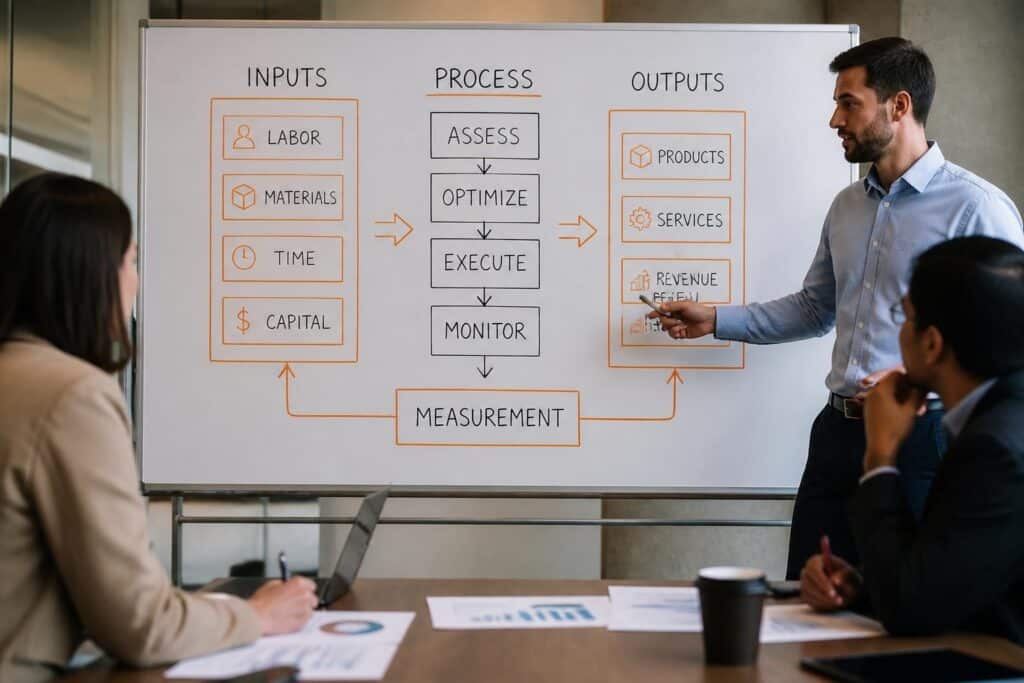
TL;DR
- Asset management software IT is a system that tracks, manages, and optimizes hardware, software licenses, network devices, and IT infrastructure throughout their entire lifecycle.
- Core capabilities include automated discovery, real-time inventory tracking, license compliance monitoring, and depreciation calculation for IT assets.
- Implementation reduces costs by 15-30%, prevents compliance violations, and eliminates redundant purchases through centralized visibility.
- Modern systems integrate with helpdesk platforms, procurement tools, and configuration management databases (CMDB) for unified IT operations.
- Essential features include barcode/RFID scanning, software license harvesting, contract management, and audit trail documentation.
Asset management software IT is a centralized platform that automatically discovers, catalogs, monitors, and manages all technology assets across an organization's infrastructure.
IT departments in 2026 manage an average of 4,200 assets per 1,000 employees, spanning physical hardware, virtual machines, software subscriptions, and cloud resources. Manual tracking through spreadsheets creates gaps that cost organizations an average of $94,000 annually in duplicated licenses, compliance penalties, and lost productivity. Asset management software IT eliminates these inefficiencies by providing real-time visibility into every device, application, and license across the technology estate.
What Is Asset Management Software IT and Why Organizations Need It
Asset management software IT provides automated tracking and lifecycle management for all technology resources within an enterprise environment. The system maintains a comprehensive database that records asset details including purchase date, cost, location, assigned user, warranty status, and maintenance history.
Organizations deploy asset management software IT to solve three critical challenges: financial waste from duplicate purchases, compliance risk from unlicensed software, and operational delays from incomplete inventory data. A manufacturing company with 850 employees might discover 200 unused software licenses worth $180,000 annually through initial asset discovery.
The software operates through agent-based or agentless discovery mechanisms. Agent-based systems install lightweight software on endpoints that reports hardware specifications, installed applications, and usage patterns back to a central database. Agentless discovery scans network segments using protocols like SNMP, WMI, and SSH to identify devices without requiring local installation.
Core Components of IT Asset Management Systems
Every asset management software IT platform contains five foundational modules that work together:
- Discovery and inventory engine – Automatically identifies all devices, applications, and network equipment across physical and virtual environments
- License management – Tracks software entitlements, calculates compliance positions, and alerts before renewal deadlines
- Contract and warranty tracking – Maintains vendor agreements, support contracts, and warranty expiration dates with automated notifications
- Asset lifecycle workflow – Manages procurement, deployment, maintenance, and retirement processes with approval chains
- Reporting and analytics dashboard – Generates compliance reports, cost analysis, utilization metrics, and audit documentation

Asset records connect to configuration items in the CMDB, creating relationships between assets and the services they support. When a server fails, the system immediately identifies which applications, users, and business processes are affected.
How Asset Management Software IT Tracks and Manages Technology Assets
The tracking process begins with initial discovery across all network segments, cloud subscriptions, and remote locations. The system scans IP ranges, queries Active Directory, and connects to virtualization platforms like VMware and Hyper-V to build a complete inventory baseline.
Each discovered asset receives a unique identifier that persists throughout its lifecycle. Physical assets get tagged with barcodes or RFID labels that link to their digital records. The identifier connects to a detailed record containing:
- Hardware specifications – Manufacturer, model, serial number, CPU, RAM, storage capacity, and peripherals
- Financial data – Purchase order number, acquisition cost, depreciation schedule, and current book value
- Assignment information – Current user, department, physical location, and custody chain history
- Software inventory – All installed applications with version numbers, license keys, and installation dates
- Maintenance records – Service tickets, repairs, upgrades, and configuration changes with timestamps
The system continuously monitors assets through scheduled scans that detect changes. When a user installs unauthorized software, the platform flags the variance within hours and creates an alert for the IT security team.
Automated Software License Management
Software license tracking prevents the two most costly compliance scenarios: over-licensing (paying for unused seats) and under-licensing (facing audit penalties). Asset management software IT compares purchased entitlements against actual installations across all endpoints.
The license reconciliation process runs automatically on a scheduled basis. The system matches discovered installations to license purchases from the contract database, calculating the compliance position for each application. Organizations typically discover they are 15-25% over-licensed on some products while simultaneously under-licensed on others.
License harvesting identifies installations that have not been launched in 90+ days. These dormant licenses can be reclaimed and reassigned to users who need them, eliminating unnecessary renewal costs. A global consulting firm using this approach reduced their annual software spend by $340,000 in the first year.
Why IT Asset Management Software Reduces Costs and Improves Compliance
Financial benefits from asset management software IT fall into three categories: eliminated waste, optimized purchasing, and avoided penalties. The average organization achieves ROI within 8-14 months of implementation.
Direct cost reductions include:
- Prevented duplicate purchases through visibility into existing inventory
- Eliminated maintenance on retired assets that were still being billed
- Negotiated volume discounts using accurate usage data during vendor renewals
- Reclaimed and reassigned unused software licenses before renewal
- Identified underutilized hardware that can be redeployed instead of purchasing new equipment
Compliance protection addresses both software licensing and regulatory requirements. When vendors like Microsoft, Oracle, or Adobe initiate audits, organizations with asset management software IT can produce complete installation and entitlement reports within hours instead of weeks. The documented audit trail demonstrates good-faith compliance efforts that often reduce penalty assessments.
For regulated industries, the system maintains the documentation required by standards like ISO 27001, SOC 2, and HIPAA. Healthcare organizations must prove which devices access protected health information (PHI) and demonstrate encryption status, patch levels, and access controls. Asset management software IT generates these compliance reports automatically.
Operational Efficiency Gains
IT teams spend 30-40% less time on manual asset-related tasks after implementing automated systems. Helpdesk technicians instantly locate asset details during support calls without searching through spreadsheets. Procurement teams access current inventory before approving purchase requests, preventing redundant acquisitions.
Mean time to resolution (MTTR) for incidents decreases because technicians immediately identify asset configurations, warranty status, and available spare equipment. When a critical server fails, the system shows whether a backup device is available or if emergency procurement is required.
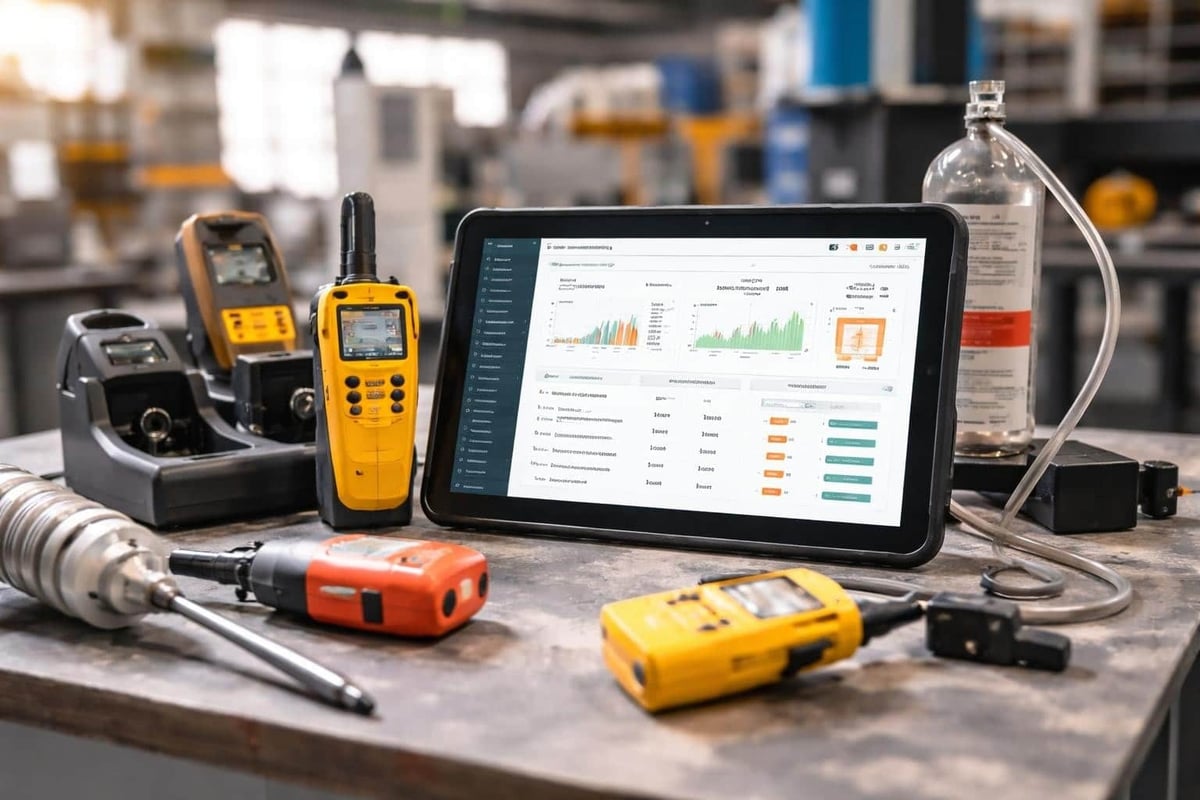
The Service Module from Brytend extends basic asset tracking into comprehensive service lifecycle management. It enables organizations to register serialized inventory, schedule preventive maintenance, automate service reminders, and generate detailed service certificates. This structured approach tracks equipment through its full lifecycle, including service history, condition assessments, warranty details, and upcoming maintenance tasks.
What Features Define Enterprise-Grade Asset Management Software IT
Enterprise platforms deliver capabilities beyond basic inventory tracking. Advanced systems support organizations with 5,000+ assets across multiple locations, complex software licensing scenarios, and integration requirements with existing IT infrastructure.
| Feature Category | Enterprise Capabilities | Business Impact |
|---|---|---|
| Discovery | Agentless network scanning, cloud API integration, IoT device detection | Complete visibility across hybrid infrastructure |
| Integration | REST APIs, CMDB synchronization, ITSM platform connectors | Unified data across IT management tools |
| Automation | Workflow engine, approval chains, scheduled tasks | Reduced manual effort and consistent processes |
| Reporting | Custom dashboards, scheduled reports, audit documentation | Data-driven decisions and compliance evidence |
| Security | Role-based access, change audit trails, encryption | Protected asset data and accountability |
The workflow engine automates multi-step processes like asset procurement. A purchase request triggers approval routing based on cost thresholds, budget verification, and manager hierarchy. Once approved, the system generates purchase orders, creates asset records upon receipt, and schedules deployment tasks.
Mobile applications enable field technicians to scan barcodes, update asset locations, and record maintenance activities from smartphones or tablets. A facilities team performing quarterly inspections across 15 buildings can update 2,000 asset locations in hours instead of days.
How to Implement Asset Management Software IT Successfully
Implementation follows a structured six-phase approach that typically spans 12-16 weeks for mid-size organizations. Rushing deployment leads to incomplete data that undermines the entire system.
Phase 1: Planning and Scope Definition (Weeks 1-2)
Define which asset types will be tracked and establish data accuracy standards. Most organizations start with core IT assets (servers, workstations, network devices, software licenses) before expanding to peripherals and mobile devices.
Identify integration points with existing systems including helpdesk platforms, procurement tools, and financial systems. Document current asset management processes to understand workflow requirements.
Phase 2: Initial Discovery and Data Import (Weeks 3-6)
Run network discovery scans to identify all connected devices. Import existing asset data from spreadsheets, procurement systems, and previous tracking tools. Expect 15-25% of imported data to require cleanup and verification.
Establish asset naming conventions and categorization schemes. Consistent taxonomy ensures useful reporting and prevents duplicate records. A server might be categorized as "Hardware > Server > Physical > Production" with standardized naming like "SVR-LOC-FUNC-###".
Phase 3: Data Verification and Enrichment (Weeks 7-9)
Physical verification confirms that discovered assets exist and are properly tagged. Teams walk through each location with mobile scanners, applying barcode labels and verifying asset details. This process identifies ghost assets (disposed items still in records) and zombie assets (purchased items never deployed).
Supplement automated discovery with manual entry for network-isolated devices, offline equipment, and assets in transit. Contract and warranty documents get uploaded and linked to asset records.
Phase 4: Process Integration and Automation (Weeks 10-12)
Configure workflows that connect asset management to daily operations. When a user submits a helpdesk ticket about a slow laptop, the system automatically retrieves the device specifications, warranty status, and prior repair history.
Procurement approval chains route based on asset type and cost. Software license requests check current compliance position before approval. Disposal workflows ensure data sanitization requirements are met before equipment leaves the organization.
Phase 5: User Training and Rollout (Weeks 13-14)
Role-based training ensures each user group understands their responsibilities. Procurement staff learn to verify inventory before approving purchases. Helpdesk technicians learn to update asset assignments during device swaps. IT managers learn to generate compliance reports.
Training materials should include specific scenarios from daily workflows rather than generic feature overviews. A technician replacing a failed workstation needs to know exactly where to check spare inventory, how to transfer the asset assignment, and how to mark the failed device for disposal.
Phase 6: Optimization and Continuous Improvement (Weeks 15-16 and ongoing)
Monitor data quality metrics including discovery accuracy, record completeness, and update timeliness. Organizations should achieve 95%+ inventory accuracy within 90 days of deployment.
Schedule regular discovery scans and establish audit processes. Quarterly physical verification of high-value assets prevents drift between records and reality. Following IT asset management best practices ensures long-term system effectiveness and alignment with ITSM processes.
What Challenges Organizations Face with Asset Management Software IT
Implementation barriers extend beyond technical configuration. Organizational challenges often determine success more than software capabilities.
Common obstacles include:
- Data quality issues – Legacy systems contain incomplete, outdated, or duplicate records that require extensive cleanup
- User adoption resistance – Staff accustomed to informal tracking resist mandatory processes and data entry requirements
- Scope creep – Organizations attempt to track too many asset types simultaneously, overwhelming implementation teams
- Integration complexity – Connecting to legacy systems without modern APIs requires custom development or manual data synchronization
- Change management – New workflows disrupt established patterns, requiring executive sponsorship and consistent enforcement
The most frequent mistake is treating asset management software IT as purely technical rather than a process transformation initiative. Technology enables the solution, but success requires policy changes, role definition, and accountability structures.
Organizations that skip physical verification during implementation operate with 30-40% inaccurate baseline data. Garbage in equals garbage out-the system cannot provide reliable insights when foundational records are wrong.
Manual Tracking vs. Automated Systems
| Aspect | Manual Spreadsheets | Asset Management Software IT |
|---|---|---|
| Discovery | Manual entry, prone to omissions | Automated network scanning, 95%+ complete |
| Accuracy | 60-70% accurate after 6 months | 95%+ accurate with scheduled scans |
| Labor | 15-20 hours/week for 1,000 assets | 2-3 hours/week for same volume |
| Compliance | Weeks to prepare audit responses | Hours to generate complete reports |
| Cost visibility | Delayed, incomplete financial data | Real-time cost tracking and forecasting |
Small organizations with fewer than 200 assets might function adequately with spreadsheet tracking. Once asset counts exceed 500, the manual approach cannot scale and creates unacceptable risk exposure.
How to Optimize Asset Management Software IT for Maximum Value
Optimization begins after stable deployment when focus shifts from data collection to insight generation. Advanced organizations extract significantly more value from the same platform through strategic configuration and process refinement.
License Optimization Strategies
Software spending represents 40-50% of total IT budgets in 2026, making license optimization the highest-value use case. Asset management software IT enables four specific optimization techniques:
- True-up analysis – Compare actual installations to license entitlements quarterly, adjusting subscriptions before renewal
- Harvesting programs – Automatically reclaim licenses from inactive users or devices not accessed in 90+ days
- Edition downgrading – Identify users with premium licenses who only use standard features
- Consolidation opportunities – Replace multiple point solutions with integrated platforms that reduce total license count
A financial services firm with 3,500 employees used these techniques to reduce annual software costs from $4.2M to $3.1M without impacting operations. The asset management system identified 600 unused licenses and 350 users who could downgrade to lower-cost editions.
Predictive Maintenance and Replacement Planning
Asset management software IT tracks failure patterns across hardware populations. When 15% of a specific laptop model experiences hard drive failures within 24 months, the system flags the remaining units as high-risk candidates for proactive replacement.
Depreciation tracking combined with maintenance cost history identifies the economic replacement point for each asset class. When repair costs exceed 60% of replacement value, disposal becomes the optimal financial decision. Automated workflows trigger replacement requisitions when assets cross this threshold.
Warranty expiration reports prevent organizations from paying for repairs that vendors should cover. The system alerts IT teams 30 days before warranty expiration, enabling timely renewal decisions or replacement planning.
Strategic Reporting for Decision-Making
Executive dashboards transform raw asset data into strategic business intelligence. Key metrics include:
- Total cost of ownership (TCO) by asset category, department, or location
- Software compliance position showing over-licensed and under-licensed applications
- Age distribution analysis revealing approaching end-of-life equipment concentrations
- Utilization metrics identifying underused resources that can be reallocated
- Vendor spending consolidation opportunities based on purchase volume analysis
These insights inform technology refresh cycles, budget allocation, and vendor negotiation strategies. Organizations make data-driven decisions rather than relying on anecdotal information or incomplete spreadsheets.
What Best Practices Ensure Long-Term Asset Management Success
Sustainable asset management programs combine technology, process discipline, and organizational accountability. The software enables these practices but cannot enforce them independently.
Organizations should establish a centralized asset management office with clear ownership and authority. This team maintains data quality standards, enforces policies, and manages the platform. Without dedicated ownership, asset management initiatives decay within 18-24 months as data accuracy deteriorates and users bypass formal processes.
Policy documentation must define asset lifecycle requirements from requisition through disposal. When can users request equipment? Who approves purchases above specific thresholds? What security requirements apply before disposing of storage devices? Documented policies create consistent expectations across the organization.
Regular audits verify that physical reality matches system records. Sample 5-10% of assets quarterly through random physical verification. Discrepancies indicate process breakdowns that require investigation and correction. Implementing data center asset management best practices strengthens infrastructure reliability and compliance.
Integration with procurement workflows prevents purchases that duplicate existing inventory. When a department submits a laptop requisition, the approval process should verify whether redeployable equipment exists before authorizing new expenditure.

Tag all physical assets with durable barcode or RFID labels immediately upon receipt. Delaying tagging creates tracking gaps that persist throughout the asset lifecycle. The initial investment in labeling infrastructure pays dividends through reduced manual lookup time and improved inventory accuracy.
Establish service level agreements (SLAs) for data accuracy and update timeliness. Asset records should reflect reality within 24-48 hours of changes. When equipment moves between locations or transfers to new users, updates must happen promptly to maintain system reliability.
Case Example: Manufacturing Asset Management Transformation
A precision manufacturing company with 1,200 employees managed 6,500 IT assets across four facilities using departmental spreadsheets. Annual software audits required three weeks of manual work, purchase duplication cost approximately $180,000 per year, and helpdesk resolution times averaged 45 minutes per ticket.
After implementing asset management software IT over 14 weeks, the organization achieved:
- Discovered 400 untracked devices and identified 220 ghost assets still being depreciated
- Reduced software audit preparation from three weeks to four hours
- Eliminated duplicate purchases, saving $165,000 in the first year
- Decreased mean helpdesk resolution time to 18 minutes through instant asset lookup
- Achieved 97% inventory accuracy verified through quarterly physical audits
The implementation required 480 hours of internal effort plus software licensing costs of $45,000 annually. ROI was achieved in 11 months based purely on eliminated waste and efficiency gains.
How Asset Management Software IT Integrates with Broader IT Operations
Modern IT environments operate as interconnected ecosystems rather than isolated tools. Asset management software IT functions as a central data repository that feeds multiple operational systems.
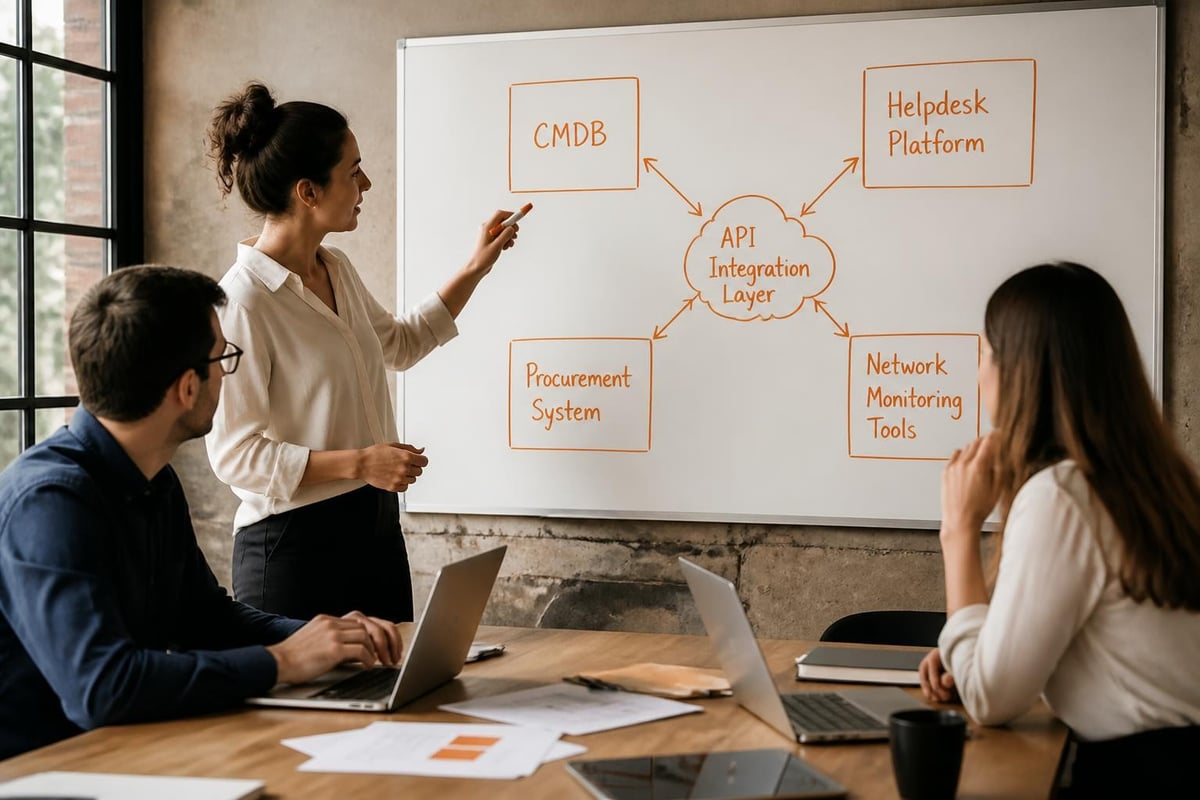
Configuration Management Database (CMDB) integration creates relationships between assets and the services they support. When a database server appears in both systems, the CMDB records which applications depend on it, while the asset management platform tracks its warranty status, maintenance history, and financial details. This bidirectional relationship enables impact analysis during incidents and change planning.
Helpdesk and ticketing platforms query asset data automatically when users submit support requests. The ticket captures the asset identifier, automatically populating warranty status, specifications, and prior issue history. Technicians see complete context without manual lookup, accelerating resolution.
Procurement and financial systems receive asset data for accurate budgeting and cost allocation. When finance teams analyze IT spending by department, the asset management platform provides current inventory values, depreciation schedules, and projected replacement costs.
Security Information and Event Management (SIEM) platforms consume asset data to understand which devices access sensitive resources. When a security incident involves a specific workstation, the SIEM correlates it with asset records showing the assigned user, location, and installed software.
Network monitoring tools identify devices by IP address and MAC address. Integration with asset management software IT enriches network data with business context like asset owner, department, and criticality level. Network teams immediately know whether an offline device is a critical production server or a test workstation.
Evaluating top IT asset management software options helps organizations select platforms with robust integration capabilities that fit their existing technology stack.
What Compliance Requirements Drive Asset Management Software IT Adoption
Regulatory frameworks across industries mandate specific asset tracking and security controls. Asset management software IT provides the documentation and evidence required to demonstrate compliance.
Software Licensing Compliance
Software vendors enforce license compliance through regular audits. Microsoft, Oracle, Adobe, and other major publishers audit 20-30% of enterprise customers annually. Organizations without accurate installation tracking face penalties averaging $250,000-$500,000 per audit.
Asset management software IT maintains the documentation required to defend audit findings. The platform shows purchase orders for licenses, tracks installations across all endpoints, and demonstrates which users accessed specific applications. This evidence either prevents penalties entirely or reduces assessments when good-faith compliance efforts are evident.
Regulatory and Industry Standards
Healthcare organizations subject to HIPAA must track which devices access electronic protected health information (ePHI) and demonstrate appropriate security controls. Asset management software IT records encryption status, patch levels, antivirus currency, and access logs for covered systems.
Financial services firms regulated by SOX and PCI-DSS must maintain detailed change logs for systems that process financial transactions or payment card data. The asset management platform's audit trail documents every configuration change, software installation, and hardware modification with timestamps and user attribution.
Government contractors following NIST 800-171 or CMMC requirements must demonstrate comprehensive asset inventories including security configurations. The automated discovery and continuous monitoring capabilities prove that all systems are known, tracked, and properly secured.
Following comprehensive IT asset management best practices maximizes value while ensuring regulatory compliance across multiple frameworks.
What Emerging Trends Shape Asset Management Software IT in 2026
Cloud asset management extends traditional platforms to track SaaS subscriptions, IaaS resources, and PaaS services. Organizations now manage 60-70% of IT assets in cloud environments where traditional discovery tools cannot operate. Modern asset management software IT connects to cloud provider APIs from AWS, Azure, and Google Cloud to inventory virtual machines, storage, databases, and application services.
SaaS subscription management addresses the 40% annual growth in application spending. Marketing teams, sales departments, and individual business units purchase cloud applications outside IT visibility. Shadow IT creates security risks, compliance gaps, and wasteful spending on duplicate functionality. Asset management platforms now integrate with expense management systems and single sign-on providers to discover unauthorized SaaS usage.
AI-powered optimization analyzes usage patterns to recommend cost reductions and efficiency improvements. Machine learning algorithms identify underutilized assets, predict failure probability based on historical data, and suggest optimal refresh cycles. These recommendations deliver value that human analysts would take months to generate manually.
IoT and OT asset tracking extends platforms beyond traditional IT equipment. Manufacturing sensors, building automation systems, medical devices, and industrial controllers require the same lifecycle management as servers and workstations. Asset management software IT adapts to track these specialized devices with industry-specific attributes.
Sustainability reporting features calculate environmental impact from IT assets. Organizations track energy consumption, carbon footprint, and e-waste generation to support corporate sustainability goals. Asset disposal workflows ensure proper recycling and data sanitization while documenting environmental compliance.
Asset management software IT transforms technology operations from reactive firefighting to strategic optimization through automated discovery, continuous monitoring, and comprehensive lifecycle management. Organizations gain financial control, compliance protection, and operational efficiency that manual processes cannot deliver. Brytend specializes in developing custom asset management solutions tailored to your specific infrastructure, integration requirements, and business processes. Contact Brytend today to build a platform that addresses your unique asset management challenges.