Managing customer relationships means tracking every interaction, device and document tied to a customer so each contact is informed, timely and traceable. For gas detection suppliers, service companies and calibration labs, that also means keeping the compliance records customers need for audits, in the same place as the relationship history.
Customer relationship management (CRM) is the practice of recording, organizing and acting on customer data across sales, service and support, usually with a dedicated system. In a service business, the customer is rarely just a contact. The customer is a set of instruments, a calibration schedule, a pile of certificates and a person who needs to know when a unit is due back.
What does managing customer relationships involve for an equipment service company?
It involves five repeating tasks: identifying the customer's equipment, recording each service event, communicating status, issuing compliance documents and following up before the next due date. Each task depends on the same shared record.
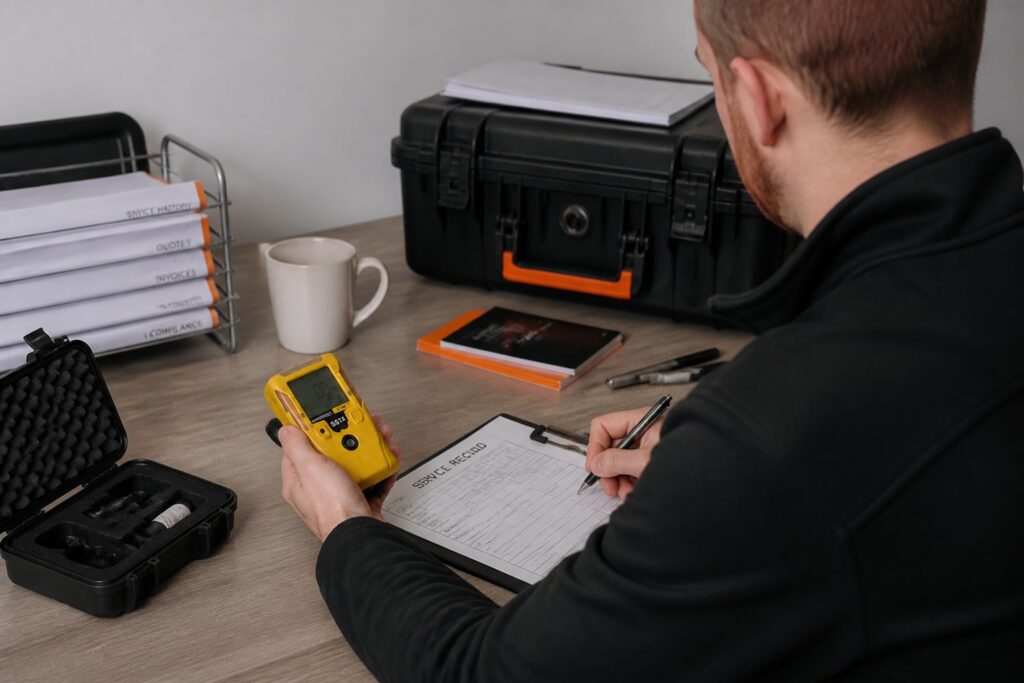
For a calibration lab, the relationship is built on evidence. A customer who sends in fixed gas detectors, portable monitors or SCBA sets expects a certificate that stands up to an inspector. If the record is incomplete, the relationship suffers even when the technical work was correct.
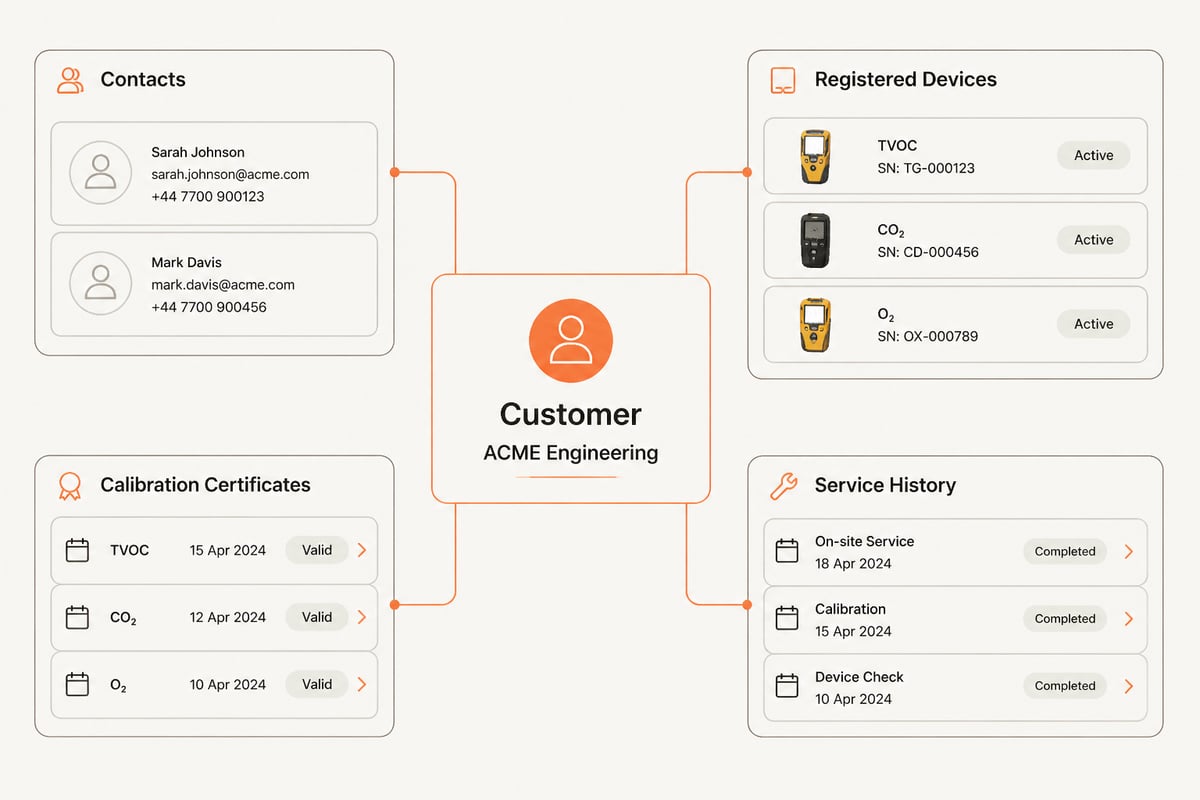
The core elements are:
- Customer profile: contacts, sites, contract terms and preferred communication channel.
- Equipment register: serial numbers, models, locations and the date each unit was last serviced.
- Service history: every calibration, bump test, repair and replacement, with the technician and date.
- Documents: certificates, test reports and quotes linked to the unit, not stored in a separate folder.
- Follow-up schedule: due dates that trigger reminders before a customer's compliance lapses.
When these live in separate spreadsheets, mailboxes and accounting tools, staff re-ask customers for information they already gave. That friction is measurable in customer sentiment. A 2025 Genesys survey found that most consumers consider it important to switch channels without repeating information.
Why do compliance records matter in customer relationships?
Compliance records matter because the customer is accountable to regulators and insurers for the equipment you service, so your documentation becomes part of their audit trail. A missing certificate is a problem on the customer's side, and they will attribute it to you.
This makes record quality a retention factor. In the same Genesys survey, a significant share of consumers said they stopped doing business with a company in the previous year because of a bad experience. For a service lab, a bad experience often looks like a certificate that cannot be found, a unit returned without a documented result or a due date nobody warned about.
Service companies that treat records as a by-product of the work tend to rebuild them under pressure when a customer is audited. Companies that treat records as the product build them as the work happens. Technicians register results at the bench, the system ties the result to the unit and the certificate is generated from that data. Brytend's quality control for gas detection companies page covers how this applies to calibration and testing operations.
Traceability also applies to stock and spare parts. In Brytend, every stock change is recorded with a reason, a user and a source document, and corrections above a limit need approval. That gives a customer-facing answer to "which sensor was fitted to my unit and when" without searching through paperwork.
How do you set up a customer record that supports service and compliance?
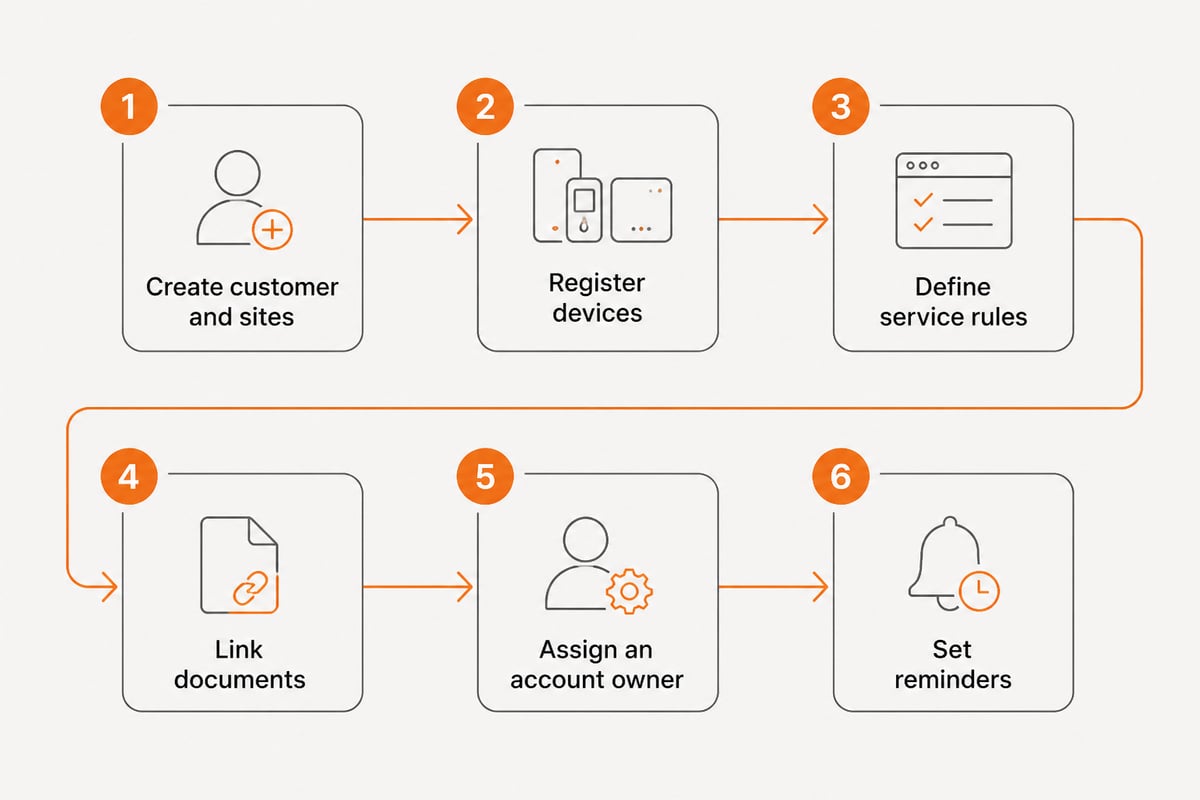
Set up the record around the customer's equipment rather than around the invoice, so that every service event attaches to a specific serial number. Follow these steps:
- Create the customer and site structure. Record the legal entity, each site where equipment is installed and the named contacts at each site, including who receives certificates.
- Register every device. Enter serial number, model, sensor type, gas configuration, location and installation date. Use QR or barcode labels so a technician can pull up the record by scanning the unit.
- Define service rules per device type. Set calibration intervals, bump test frequency and the customer's own alarm limits, so due dates calculate automatically.
- Link documents to the device. Attach certificates, manuals and previous test reports to the unit record.
- Assign an owner. One person at your company is responsible for the account, with a named backup.
- Set reminders. Schedule notices ahead of each due date, with an escalation if the customer does not respond.
Brytend's QR code asset tracking page describes how labelling supports this registration step in practice.
What does a customer service workflow look like in practice?
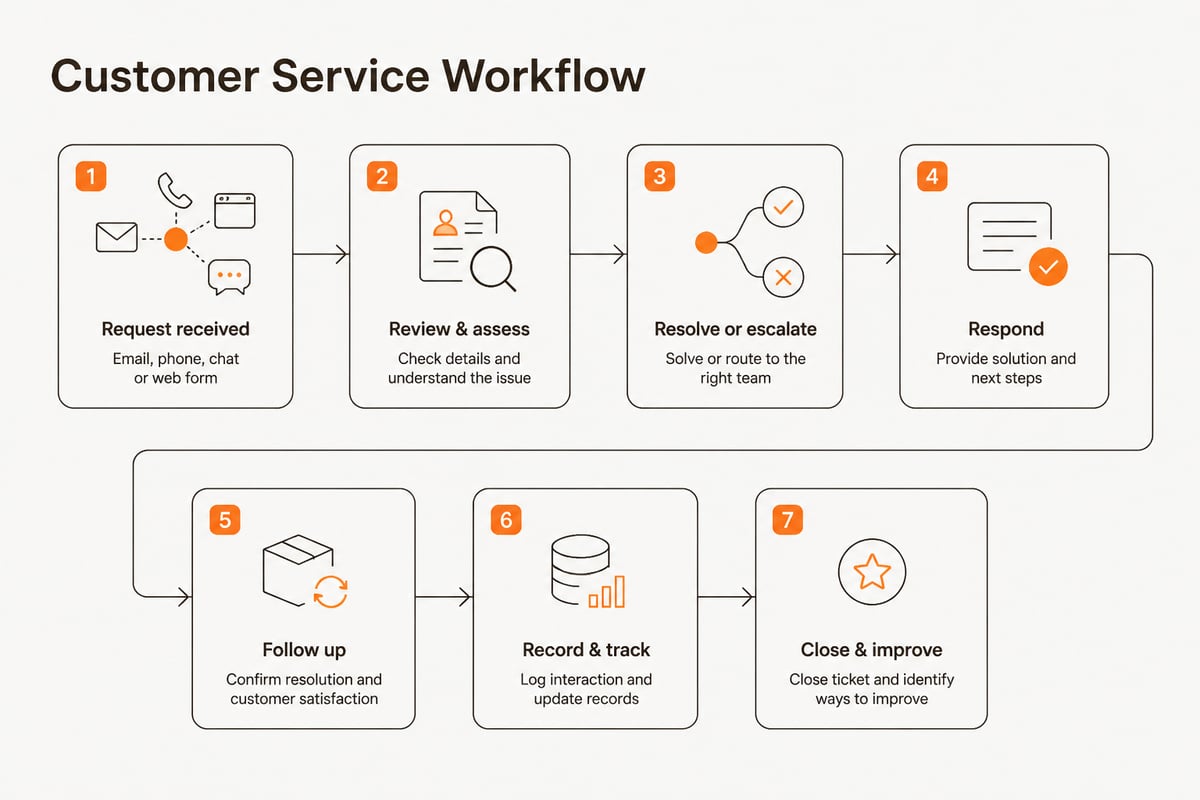
A working service workflow moves a customer's equipment from reminder to returned certificate without anyone re-entering data. The example below follows a refinery contractor that owns 40 portable four-gas monitors serviced by a calibration lab.
- Reminder. Thirty days before the calibration due date, the system flags 12 monitors and sends the contractor's safety coordinator a notice with the list.
- Booking. The coordinator confirms a pickup date. The account owner schedules a courier and the record shows status "awaiting pickup."
- Receipt. At the lab, each monitor is scanned. The system matches serial numbers to the registered devices and flags one unit that is not on the customer's register, which the account owner queries with the coordinator the same day.
- Testing. The technician runs a bump test and calibration against the customer's own limits. Results are entered at the bench. A unit fails sensor response, so the technician records a replacement sensor from stock, with the batch number and reason.
- Release. Only units that pass are cleared. Brytend checks gas tests against your own limits, and a clearance is given only when the air is safe, which removes judgment calls from the release step.
- Documents. Certificates generate from the registered results and attach to each device record. The coordinator receives them in one package.
- Invoice. The invoice is built from the work already registered, including the replacement sensor. Brytend supports Peppol BIS Billing 3.0 e-invoicing, so a customer on a Peppol network receives it electronically.
- Next cycle. The system calculates the next due dates and the reminder cycle restarts.
The customer experienced one conversation and one package of documents. Internally, no one retyped a serial number. The Brytend page on gas detection rental software shows how the same flow extends to rented units that return between jobs.
Which practices keep customers engaged between service visits?
Between visits, engagement comes from relevant communication on a predictable schedule, plus fast answers when the customer calls. Four practices cover most of it.
Anticipate due dates. Salesforce's 2024 State of Service survey reported that many customers want companies to anticipate their needs before they arise. In a calibration business, an automatic reminder is the clearest form of that.
Resolve issues on first contact. Qualtrics' 2025 contact-center research reports that customers are more likely to recommend a company when their issue is resolved on the first call. First-contact resolution depends on whoever answers the phone seeing the device history and open jobs immediately. A help desk connected to the same customer record avoids transfers and callbacks.
Ask for structured feedback. After each service cycle, send a short survey tied to the job. Brytend's customer feedback survey software page explains how responses are collected and linked to accounts, and the customer satisfaction CRM page covers how to act on the results.
Review accounts on a schedule. Once a quarter, the account owner checks overdue devices, open quotes, complaints and renewal dates for each key customer. Accounts with units approaching end of life are good candidates for a replacement conversation.
Good service also supports repeat business. The Salesforce survey found that most customers said good service makes them more likely to purchase from the same company again.
Which tools support managing customer relationships in a service business?
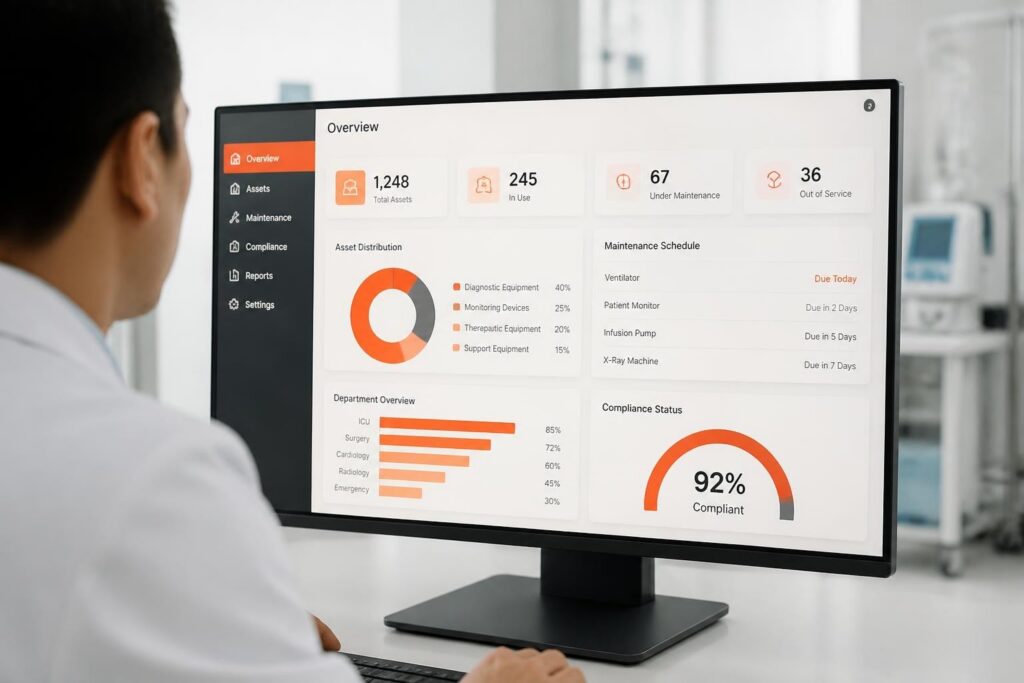
A service business needs a CRM that shares its data with equipment, documents and invoicing, rather than a standalone contact list. If the CRM cannot see the device register or the certificate history, staff will keep side spreadsheets.
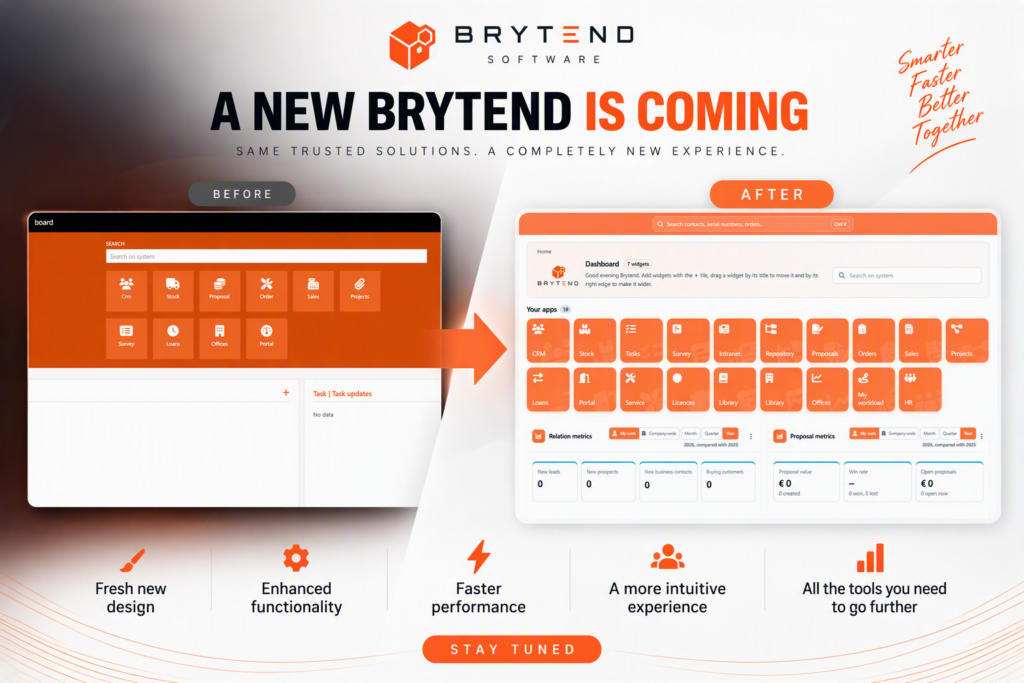
Brytend CRM is built on the same platform as its service, inventory and invoicing modules, so customers, devices, documents and data are shared across every module. That replaces multiple disconnected business systems with one record per customer, and it keeps your data in the EU under ISO 9001 and ISO 27001 certified processes. Customers are tracked alongside their equipment and open service work, and lead forms and questionnaires can be fitted into your existing workflow. Details are on the Brytend CRM page.
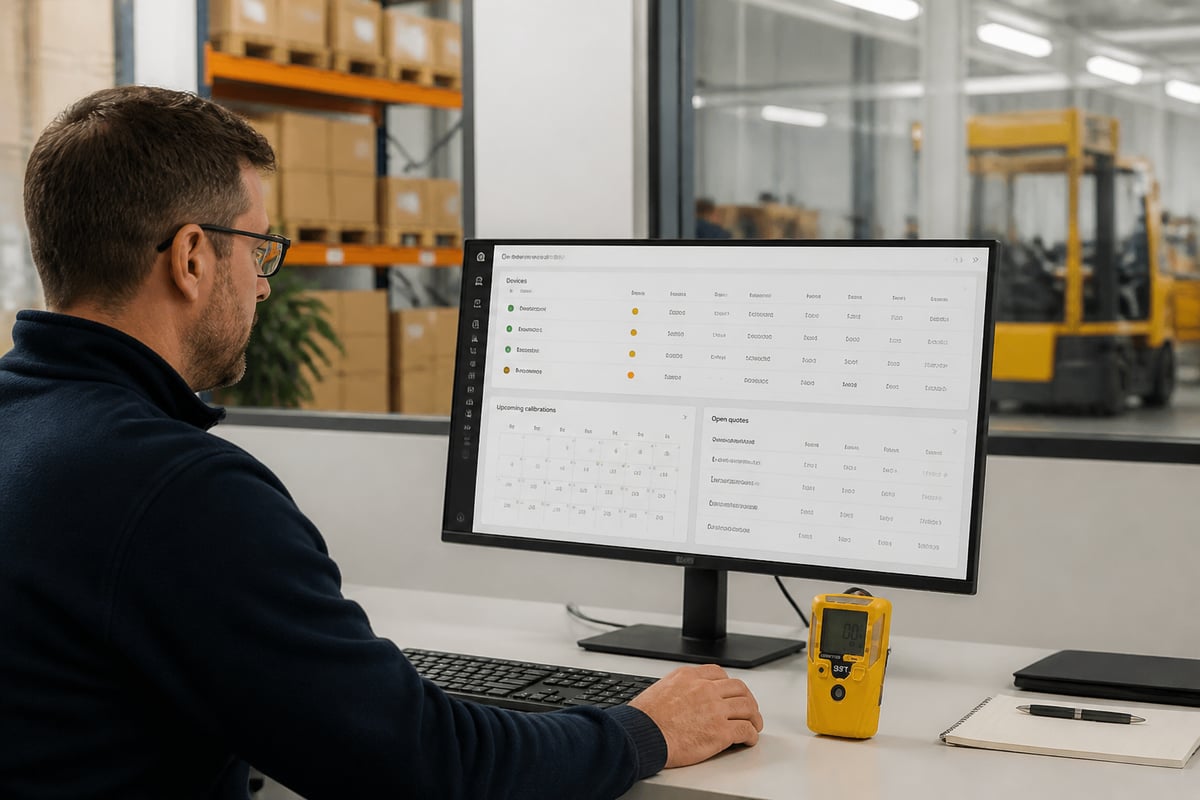
When evaluating any system for this purpose, check these points:
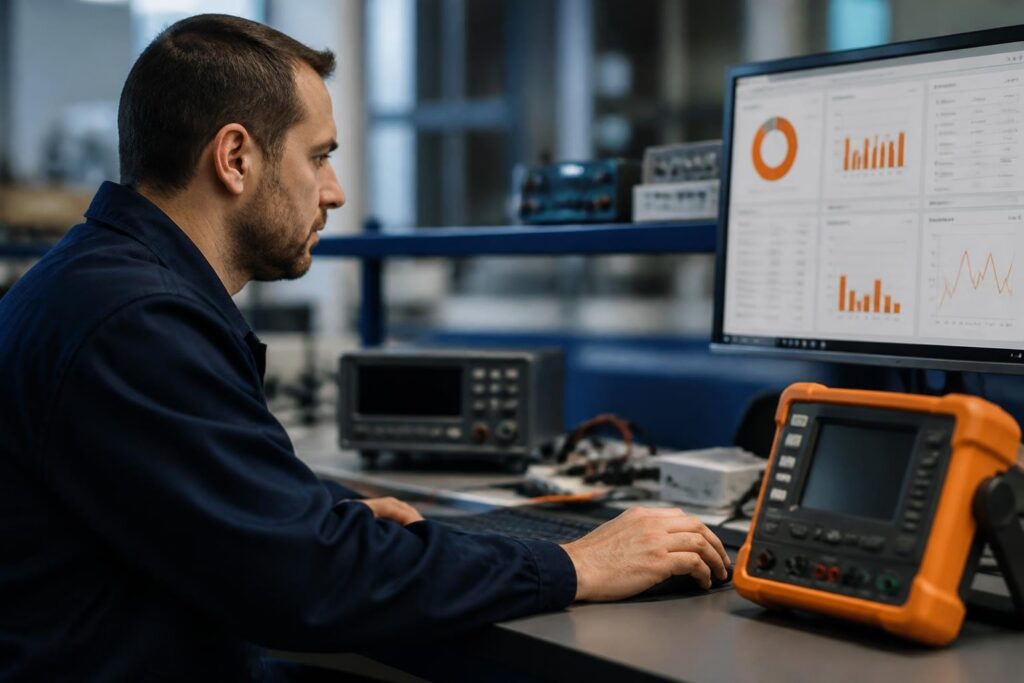
- Can a technician register results at the bench and have the certificate generate from them?
- Does the customer record show devices, documents, tickets and invoices together?
- Are due dates calculated from device rules, with reminders you can configure?
- Can corrections to stock or results be traced to a user, a reason and a source document?
- Does it connect to your accounting and e-invoicing setup through integrations?
Automation also deserves a plan. Intercom's 2025 Customer Service Transformation Report found that most support teams had invested in AI for customer service, more than had planned to. For a calibration lab, the practical starting points are automated reminders, document generation and ticket routing, because those tasks follow fixed rules and leave a clear record.
How do you measure whether customer relationships are improving?
Measure relationship health with a short set of operational indicators tied to your own records, reviewed monthly. Use these and track the trend rather than a single number:
- Overdue devices per customer: units past their due date with no booking.
- Reminder-to-booking time: days between the first notice and a confirmed pickup.
- Turnaround time: days from receipt to released certificate.
- First-contact resolution: share of customer queries closed without a callback.
- Rework: certificates reissued or results corrected after release.
- Account retention: customers that renew or book the next cycle.
Set targets from your own baseline for each indicator. Do not borrow figures from other companies, because device mix, contract terms and customer size change what a good number looks like.
If turnaround is slow, examine where units wait: receipt, testing, parts or documentation. If rework is high, look at where data is entered by hand. If overdue devices cluster in a few accounts, change how those customers are contacted, for example by moving reminders to the site safety lead instead of purchasing.
Start by listing your ten most important customers and checking, for each one, whether you can produce a full device register and every certificate within a few minutes. Where you cannot, that account needs a single connected record before anything else. Brytend builds software for service, calibration and compliance teams, and Brytend CRM keeps customers, devices and documents in one place. You can see it working with your own equipment data when you start a free trial with Brytend.